

Start with the finish brief
Embossed
Coffee Cups.
Texture with intent.
Embossed coffee cups start with a physical finish requirement, not artwork alone. Choose the cup format, identify the areas you want raised and review the result in a sample before you commit to a custom order.
CONTOUR · AI-generated fictional concept. Finish feasibility requires a physical sample.
Identify the parts that should feel raised.
Review printing, relief and the wrap seam.
Confirm the actual construction and size.
Approve the converted cup before the order.
Know what you are specifying
Embossed Coffee Cups:
Choose the right finish.
A dimensional-looking graphic does not establish a physical embossed finish. PaperBull’s special-finishes service describes embossing for selected raised logo areas and lists ripple construction separately. Confirm the finish route for your chosen cup rather than assuming that every textured appearance uses the same process.
| Finish or structure | What the brief should describe | What to confirm |
|---|---|---|
| Embossed detail | A selected raised feature, such as a logo or pattern area, intended to be felt as well as seen. | Process suitability, placement, practical detail and a physical sample of the selected cup. |
| Printed texture | Artwork that suggests depth or texture through printed lines, shading or color. | The print appearance. A textured-looking photograph does not prove that the surface is raised. |
| Ripple construction | A ribbed outer cup structure, considered separately from a selected embossed logo area. | The exact construction and cup model. Do not substitute “ripple” for an embossing specification. |
Ask for the effect you need.
Mark the intended raised area on your artwork and describe the touch and appearance you want to review. Ask whether the proposed process suits the selected cup surface and wall construction. A rendered image can start that conversation; the approved physical sample establishes the finish for your project.
Six printed product references
Choose the format.
Then confirm the finish.
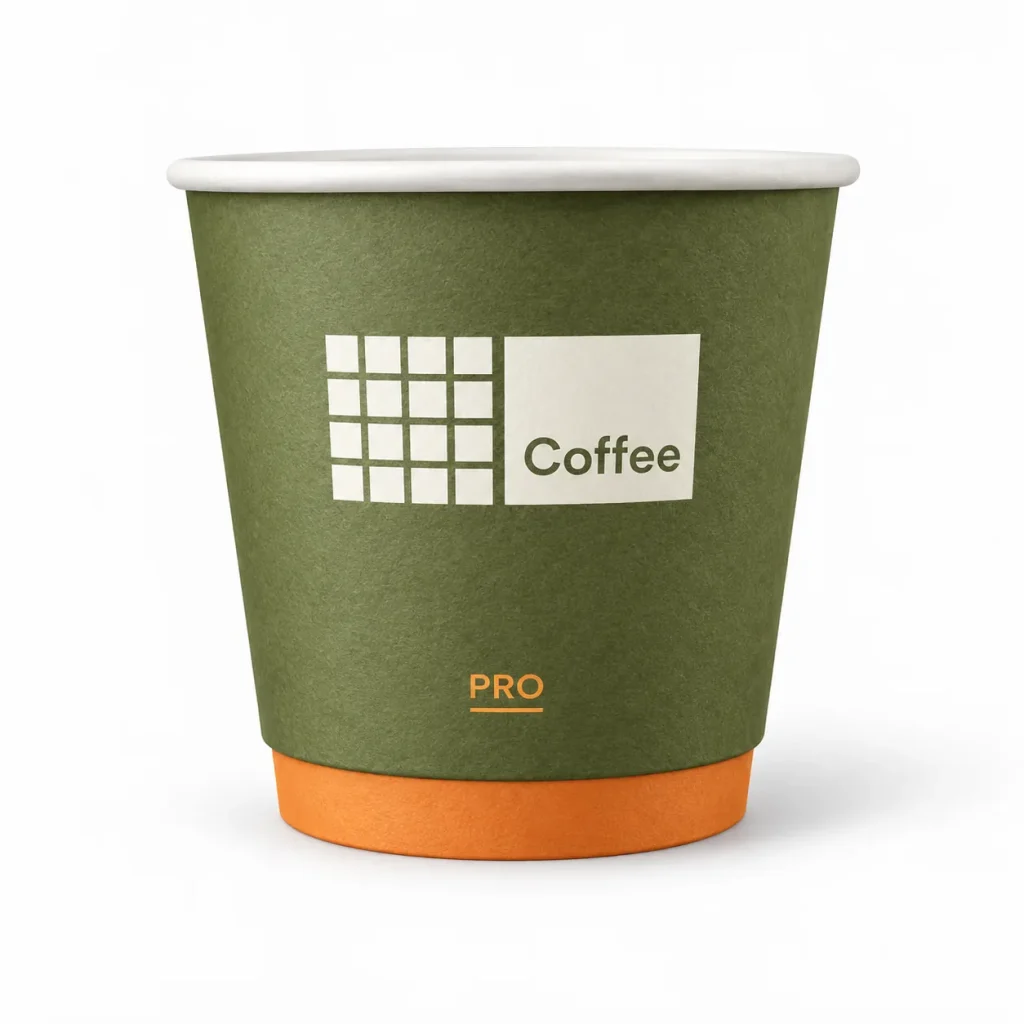
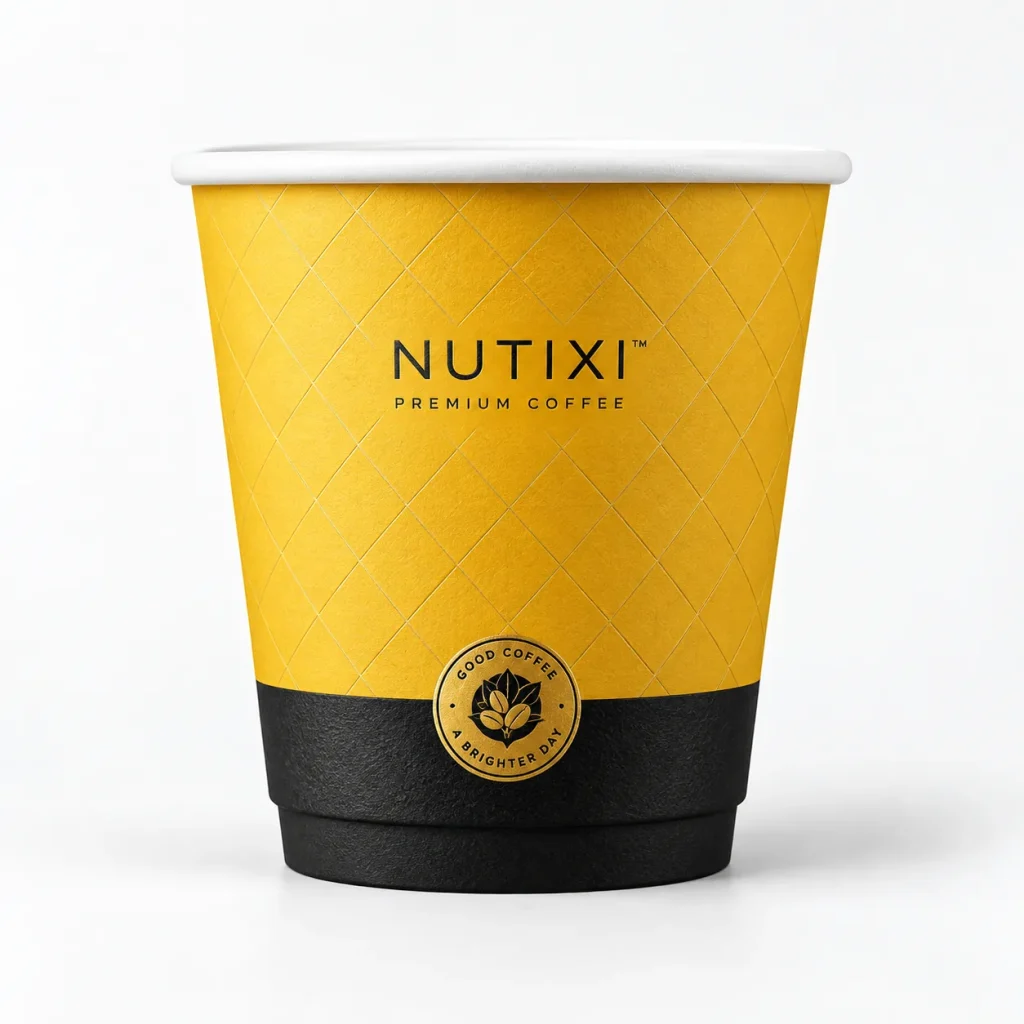
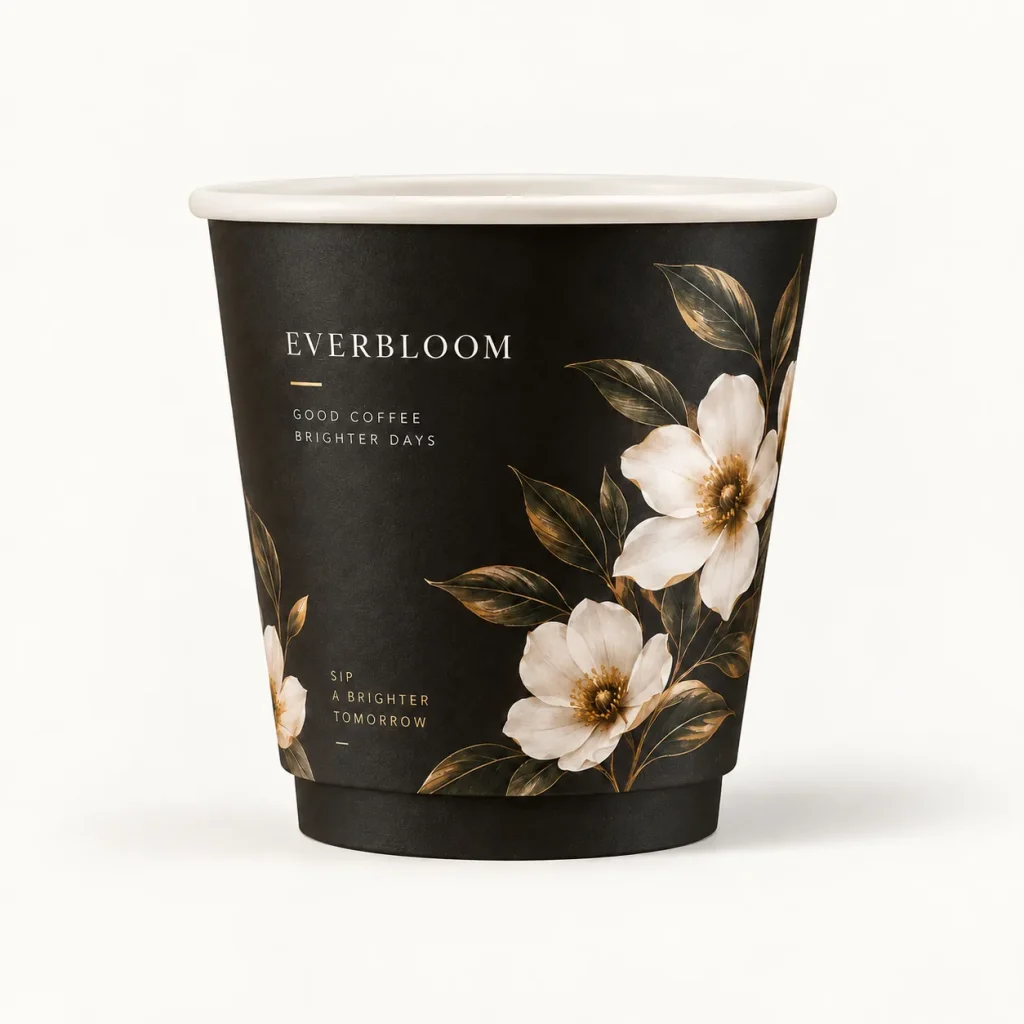
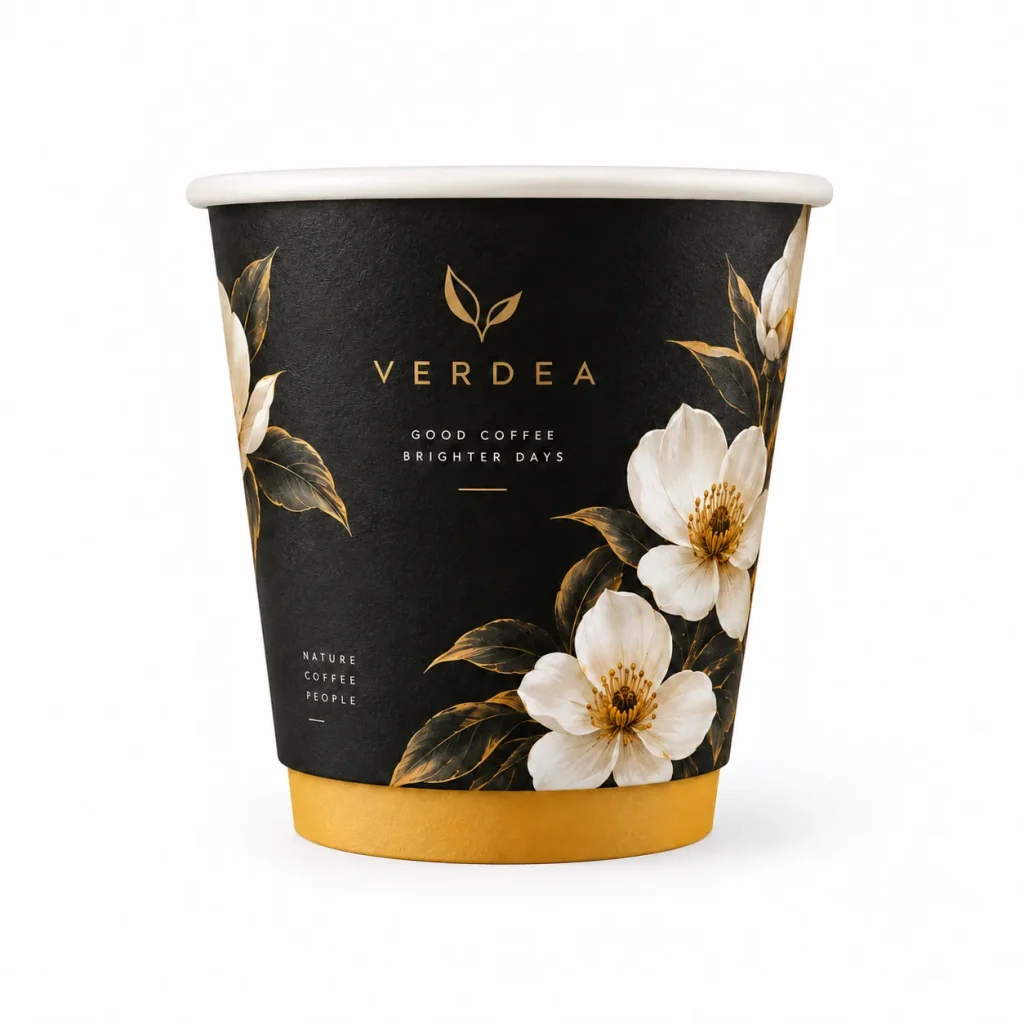
These existing printed cup products help you discuss size, structure and artwork. Their photographs show printing; the product references do not confirm an embossed version of any SKU. Ask PaperBull to assess the requested raised detail on the exact format before approving a finish or placing an order.
Printed design reference
8 oz Green Modern
Olive-green cup with clearly printed cream grid, coffee text and orange accent. Confirm embossing separately.
- Capacity
- 8 oz
- Construction
- Double wall
- Material
- Paper
- Rim
- 90 mm
- Height
- 84 mm
- Base
- 60 mm
Printed design reference
8 oz Gold Geometric
Gold/yellow cup with clearly printed black coffee text and emblem, diamond line pattern and black lower band. Confirm embossing separately.
- Capacity
- 8 oz
- Construction
- Double wall
- Material
- Paper
- Rim
- 90 mm
- Height
- 84 mm
- Base
- 60 mm
Printed design reference
8 oz Black Floral
Black cup with printed white flowers, gold-colored leaves and text; a textured-looking black surface is visible, without proof of a physical embossing process. Confirm embossing separately.
- Capacity
- 8 oz
- Construction
- Double wall
- Material
- Paper
- Rim
- 90 mm
- Height
- 84 mm
- Base
- 60 mm
Printed design reference
8 oz Black Gold Botanical
Black cup with printed flowers, gold-colored emblem/text and yellow base accent. Confirm embossing separately.
- Capacity
- 8 oz
- Construction
- Double wall
- Material
- Paper
- Rim
- 90 mm
- Height
- 84 mm
- Base
- 60 mm
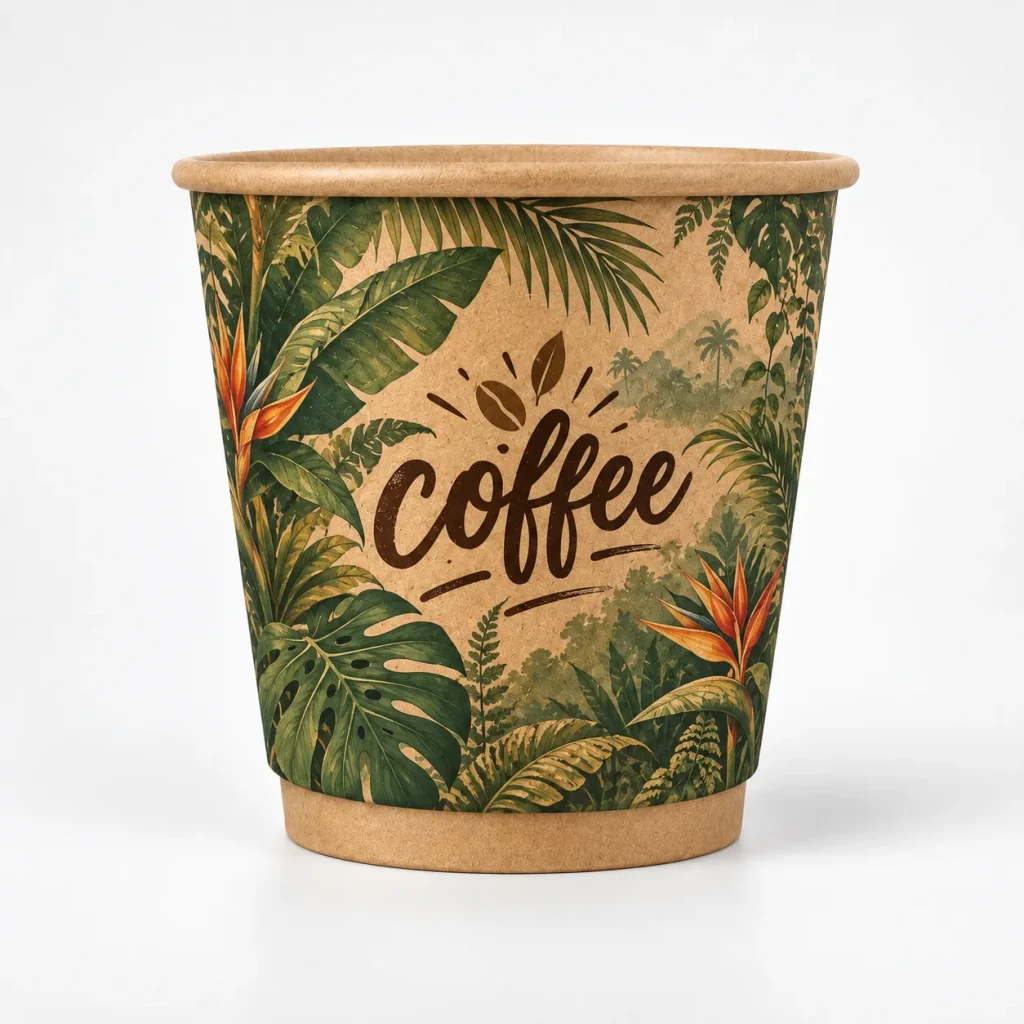
Printed design reference
8 oz Kraft Tropical
Kraft-brown style cup with clearly printed tropical foliage, orange flowers and coffee text. Confirm embossing separately.
- Capacity
- 8 oz
- Construction
- Double wall
- Material
- Paper
- Rim
- 90 mm
- Height
- 84 mm
- Base
- 60 mm
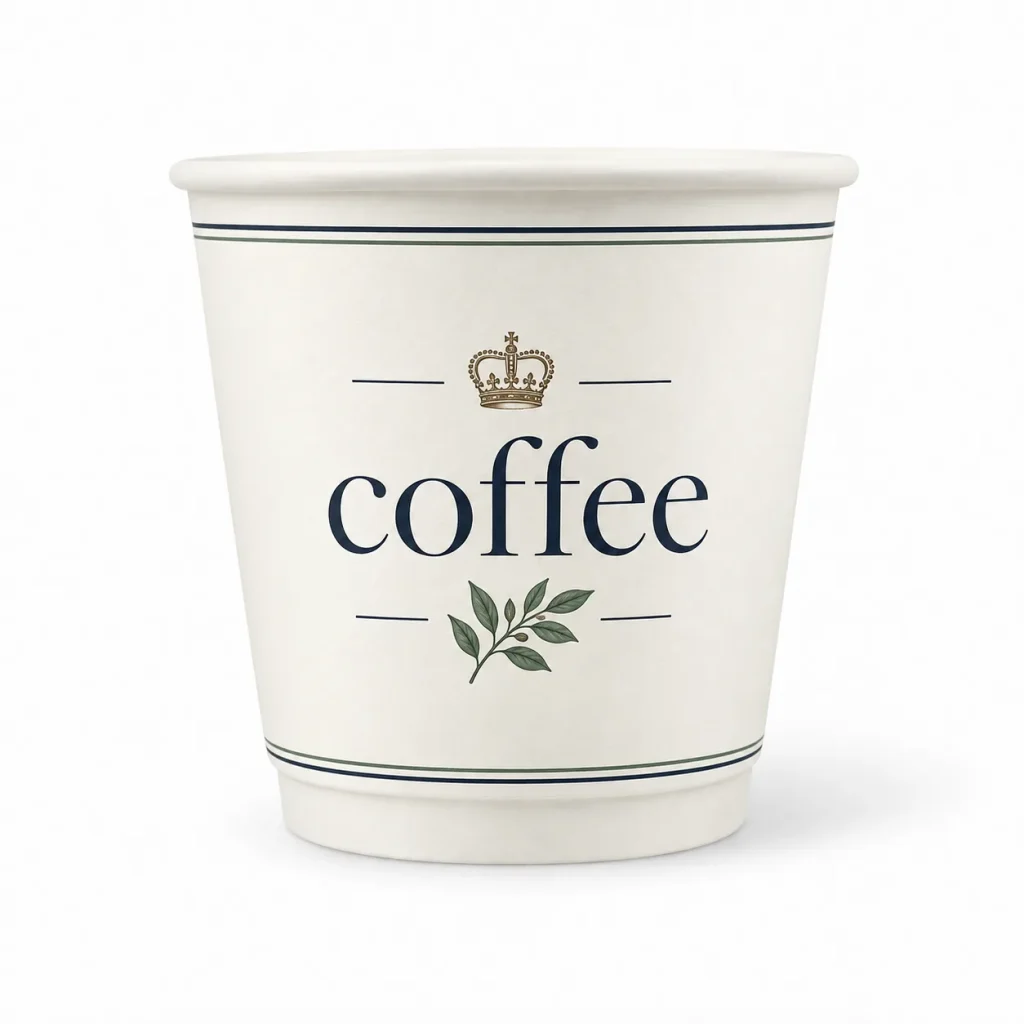
Printed design reference
8 oz Minimal Ivory
Ivory cup with printed navy coffee typography, crown emblem and green leaf detail. Confirm embossing separately.
- Capacity
- 8 oz
- Construction
- Double wall
- Material
- Paper
- Rim
- 90 mm
- Height
- 84 mm
- Base
- 60 mm
Parameters belong to the individual linked product, not the fictional concepts below. Confirm the latest product specification, accessory pairing and any proposed special finish in your quotation. Explore the wider hot paper cup collection if you need a different starting format.
Three independent creative directions
A texture story
for your brand.
CONTOUR, PLEAT and MEDALLION are fictional design concepts shown in AI-generated scenes. Each explores printed artwork alongside an imagined raised detail on a double-wall paper cup. They are creative proposals, not product photographs, stocked designs or proof of a production-ready embossing process.
01 / Quiet topography
CONTOUR
Cream paper, dark brown lettering and an imagined raised contour pattern create a restrained direction. Morning light against a warm plaster wall emphasizes the proposed surface detail. Review how much relief is feasible on the actual cup.
Fictional concept · AI-generated visualization

02 / Rhythmic color
PLEAT
Raspberry, pale pink and burgundy printing meets an imagined raised wave detail. Front and reverse views in a glass café setting explore how a pattern can move around the cup. Confirm relief placement and print alignment in a physical sample.
Fictional concept · AI-generated visualization

03 / A focal emblem
MEDALLION
Indigo and wheat yellow frame a proposed raised circular badge, with printed cream lettering. The elevated view beside linen and an open book centers the emblem. Ask how the selected logo area can be formed and approved.
Fictional concept · AI-generated visualization
Use the concept as a starting point.
Send your own logo and identify the raised detail you would like to develop. Discuss the cup, surface, artwork and available finish process together. The final production result depends on the approved specification and sample, not the apparent depth or material effects in a generated image.
Explore custom printingPattern placement and registration
Place the pattern.
Then approve the cup.
When printing and relief share a design, the brief needs to show how they relate. Decide whether a raised area should align with a printed logo, sit independently or repeat around the wrap. Ask what registration and placement can be achieved for the chosen process, with acceptance criteria agreed for your project.
Define the artwork
Make the raised area explicit.
Provide clear artwork that distinguishes printing from the proposed relief. Ask for the appropriate production template before placing final graphics, and identify any detail whose position is critical to the brand.
- Mark which elements should be raised and which should remain printed.
- Show the intended relationship between the logo, pattern and wrap seam.
- Discuss spacing around the rim, base and other construction areas.
- Identify fine lines, small type and repeat details for sample review.
Check the converted sample
Approve the effect on the cup.
A flat artwork preview does not show every aspect of the finished cup. Review the proposed surface and print on the actual construction, and ask the supplier to identify any limits before approving the job.
- Examine the raised feature under consistent light and by touch.
- Review print-to-relief alignment and the appearance at the seam.
- Check the cup with its proposed lid and any sleeve your service uses.
- Ask whether the finish affects stacking or the quoted packing arrangement.
From artwork to purchase order
A sample approval
your team can use.
Build the finish decision into the order discussion. Agree what will be sampled, which artwork revision is being reviewed and who signs off the result. Keep the approved cup, finish description and commercial specification together so each team refers to the same project.
- 01
Send the brief.
Share the cup size, intended drink, artwork, desired raised area and visual references. Add order quantity, delivery destination and your required date so the complete project can be assessed.
- 02
Confirm the route.
Discuss the cup construction and available finish method. Ask whether tooling or a mould is required, how it will be approved and how artwork or tooling changes affect the project quotation.
- 03
Review the sample.
Check a sample that represents the agreed construction, print and relief. Record the points to accept or revise, including pattern placement and the appearance of the raised areas.
- 04
Record approval.
Confirm the cup reference, artwork revision, finish description and approved sample. Agree the commercial terms, packing and delivery plan before the production order is confirmed.
Include these details in the quote request.
Tell PaperBull which cup product you want to explore, which artwork areas should be raised and whether the print must align with the relief. Include the quantity, destination, delivery timing, accessory requirements and any documentation your purchasing process needs. Ask for the applicable price, MOQ, tooling or sample charges and lead time for that exact specification.
Agree any finish measurements or acceptance tolerances with the supplier for the specific process. General descriptions such as “deep emboss” or “premium texture” are not a substitute for an approved sample and written specification.
Before you order
Questions buyers ask.
Clarify the finish, product and approval process together. The final quotation should identify the selected cup and the special finish that has been assessed for your project.
What is the difference between embossing and a printed texture?
Embossing refers to raised surface detail. Printed artwork can suggest texture or depth without establishing a raised finish. Ask for a physical sample of the selected construction to check the effect you want to buy.
Do the six product references have an embossed finish?
The references show existing printed cup products. Their inclusion does not verify embossing on those SKUs. Use them to identify the size and construction you want to discuss, then ask whether your proposed raised detail can be developed for that format.
Is a ripple cup the same as an embossed logo cup?
They describe different aspects of the cup. Ripple refers to a ribbed outer construction, while a selected embossed logo is a raised design feature. PaperBull lists them separately within its special-finishes service; specify the actual structure and effect you need.
Can a printed logo align with a raised area?
Discuss the intended relationship in the artwork brief and ask what is feasible for the selected cup and process. Agree the placement and registration criteria during sampling instead of assuming a particular tolerance from a concept image.
Are CONTOUR, PLEAT and MEDALLION available cup products?
They are fictional creative directions shown through AI-generated visualizations. They are not stocked designs or verified production samples. Share your own artwork and preferred direction to discuss a project-specific finish and sample process.
What should I send to request a quote?
Send the cup reference or required size, artwork, intended raised area, order quantity, delivery destination and required date. Include any lids, sleeves or documentation you need. Ask for the commercial terms and approval process for that exact specification.
Bring your artwork and your finish brief
Make the next step
a clear sample brief.
Share your cup size, logo or pattern, proposed raised areas, quantity and delivery details. PaperBull can discuss the available cup and finish route for your project.