
THE CAFE BUYER’S GUIDE
Espresso Cup Size Guide in oz and mL for Cafes
Start with the drink.
Approve the complete cup.
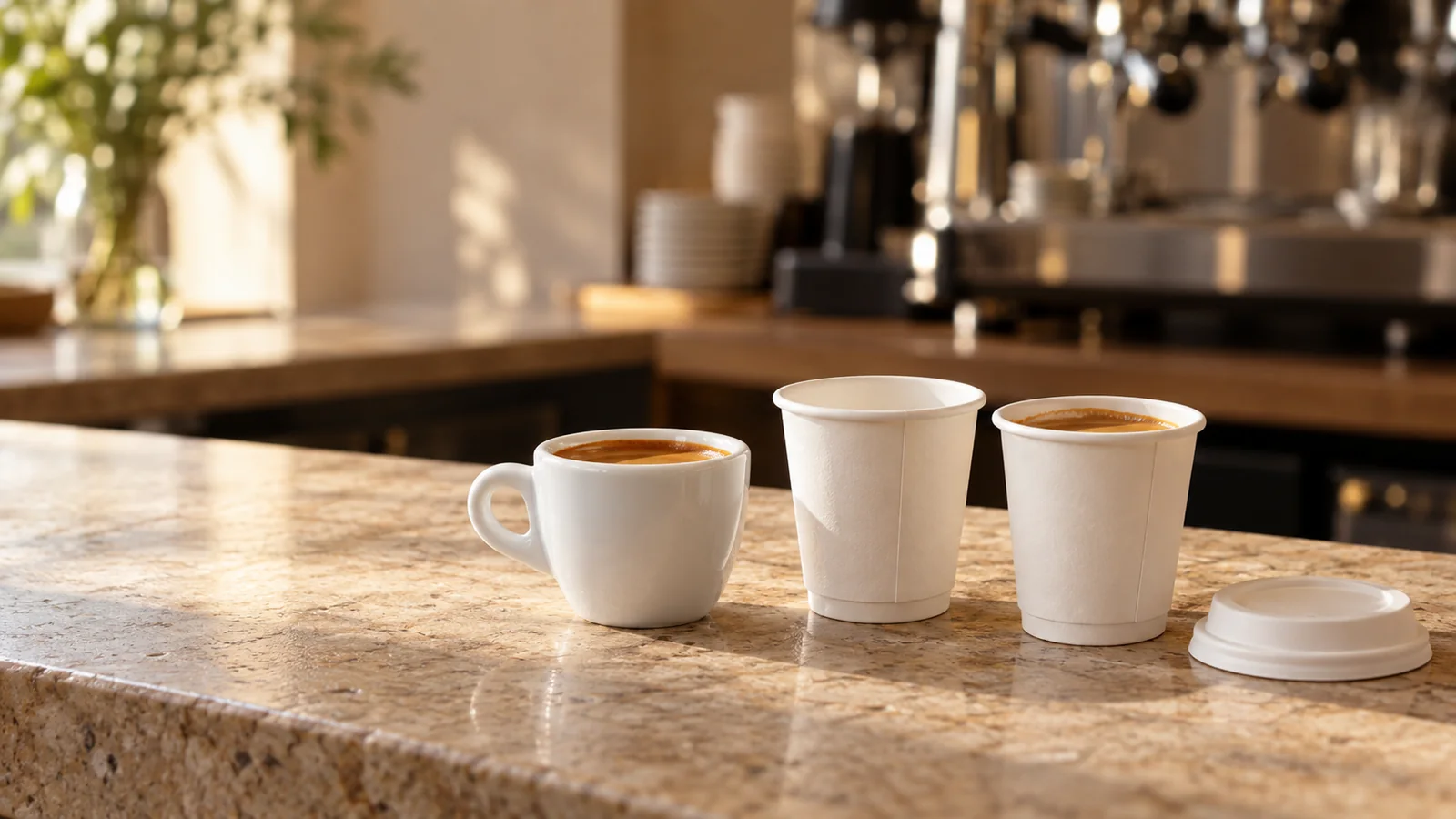
A practical espresso cup size starting point is about 2–3 US fl oz, or roughly 60–90 mL, for a small demitasse. These are rounded vessel sizes, not a rule for how much coffee to brew. For cafe takeaway service, compare the finished drink with the cup’s usable fill, then approve the lid and machine fit before placing a bulk order.
Manufacturer examples illustrate the range: illy Turkey lists a 60 mL espresso cup, while De’Longhi markets its DLSC308 set as 3 oz/90 mL. These are specific product listings, not a single international cup standard.
01 / Understand Cup Capacity
What Is the Standard Espresso Cup Size?
Start with a small vessel in the range above and ask what the supplier’s capacity figure represents. An espresso cup’s advertised size and the amount served inside it answer different questions.
Drink volume is the finished beverage you serve. Brimful capacity is the volume up to the rim. Working fill is the level you approve for your service, including any space needed for crema, additions and a fitted lid.
Ask the supplier to identify which figure appears on its specification. A cup that can contain a recipe when filled to the edge may still be unsuitable for carrying that recipe to a customer.
For a cafe with several outlets, record the approved working fill alongside the recipe. That gives purchasing staff and bar staff the same reference when a replacement cup is proposed.
02 / Compare oz and mL
Espresso Cup Size in oz and mL
This table converts US fluid ounces to milliliters. It describes volume units; it does not certify the actual capacity of a cup sold under an ounce-based product name.
| Volume in US fl oz | Calculated mL, rounded | Purchasing use |
|---|---|---|
| 2 | 59.1 | Compare with the supplier’s stated small-cup capacity |
| 2.5 | 73.9 | Intermediate reference when reviewing drawings |
| 3 | 88.7 | Compare actual working fill with the recipe |
| 4 | 118.3 | Larger sample candidate where the recipe needs more room |
Calculations use approximately 29.5735 mL per US fluid ounce from NIST’s conversion table. Rounded labels such as 60, 90 or 120 mL should not be treated as exact conversions or guaranteed usable fills. Write “US fl oz” in the purchase brief so the volume unit is explicit.
03 / Size a Double Shot
Double Espresso Cup Size Depends on the Recipe
Choose a double espresso cup around the drink you actually make. The word “double” alone is not enough to specify a vessel.
For example, the Nespresso Vertuo manual lists espresso at 40 mL and double espresso at 80 mL. Those figures describe that system’s drinks, not every cafe’s extraction recipe and not the capacity of the serving cup.
As a sample-selection approach, compare a 3 oz candidate with a 4 oz candidate when reviewing double-shot or takeaway service. A smaller cup may suit a shorter recipe; a larger option may be needed for a more generous output or additions. Approve the result after brewing, stirring and fitting the intended lid.
If your team specifies espresso yield in grams, retain that recipe measurement. Separately check the space occupied by the finished drink in the proposed cup. Do not silently turn a recipe weight into an identical milliliter figure.
A cafe trying to use one cup for both single and double espresso should test both presentations. A size that passes the double-shot fill check may look too empty for the single-shot menu item. Decide whether the convenience of one stocked size suits your service.
04 / Plan Takeaway Service
Espresso Paper Cup Size for Takeaway Service
An espresso takeaway cup needs a clear purchasing description. “Small espresso cup” leaves too much open to interpretation.
Begin with the beverage and service route: straight espresso handed across the counter, a double served with a lid, or a short milk drink taken away. Then request samples with the intended materials and matching components.
| Service scenario | Sample approach | Approval focus |
|---|---|---|
| Short espresso served immediately | Compare small 2–3 oz candidates with the actual recipe | Fill, handling and presentation |
| Double espresso to go | Compare 3 oz and 4 oz candidates | Recipe space with crema and lid fitted |
| Espresso with additions | Size around the complete drink | Finished volume and stirring routine |
| Hotel or office capsule station | Use installed machine recipes | Every enabled drink and cup clearance |
| Distributor serving several cafes | Identify each approved component pair | Exact SKUs, drawings and reorder references |
These are starting points for sample review, not a list of verified PaperBull stock sizes. Check the current hot paper cup range and request confirmation of the exact small-cup option your project needs.
Approve the lid as part of the cup specification
Ask for the exact cup SKU, rim dimensions and matching lid SKU. Compare physical samples rather than approving a lid from a similar-looking cup or the same ounce label.
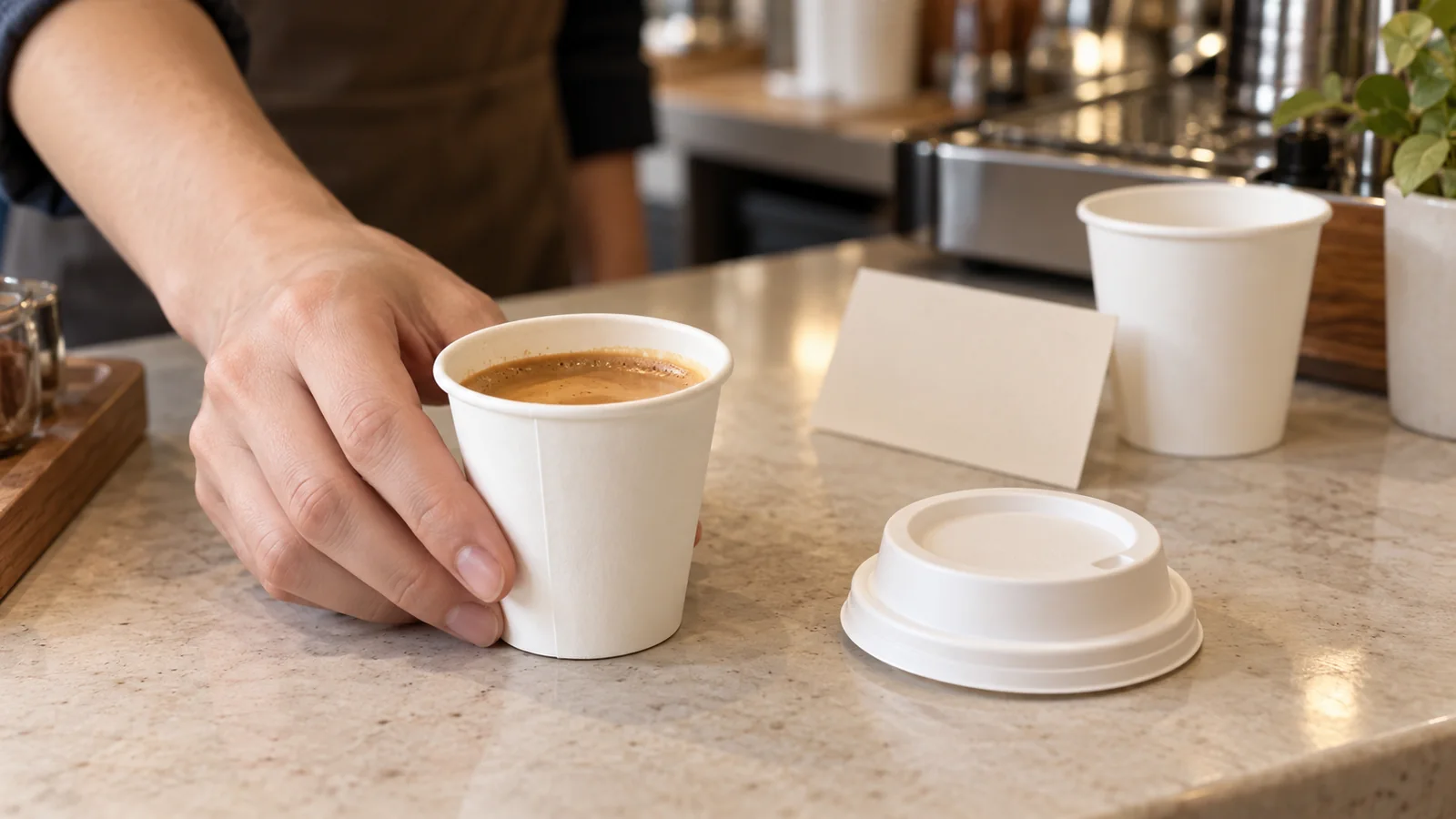
During the trial, check that staff can apply the lid consistently, that the assembled pack suits the approved fill, and that it works through the intended handover. Record the outcome and any failure. An informal trial still needs whatever formal product documentation your purchasing process requires.
Use the paper cup lid category to discuss options, then confirm the specific pairing in writing. Do not assume a lid shown for another cup size will fit the proposed espresso cup.
05 / Check Machine Clearance
Espresso Cup Dimensions in cm and Machine Fit
Capacity does not tell you cup height, top diameter or base diameter. There is no single dimensional drawing that follows automatically from a 3 oz name.
Request all three dimensions for the proposed SKU, preferably in millimeters on a supplier drawing. If the purchasing sheet uses centimeters, convert the supplied dimensions consistently and retain the original drawing for reference.
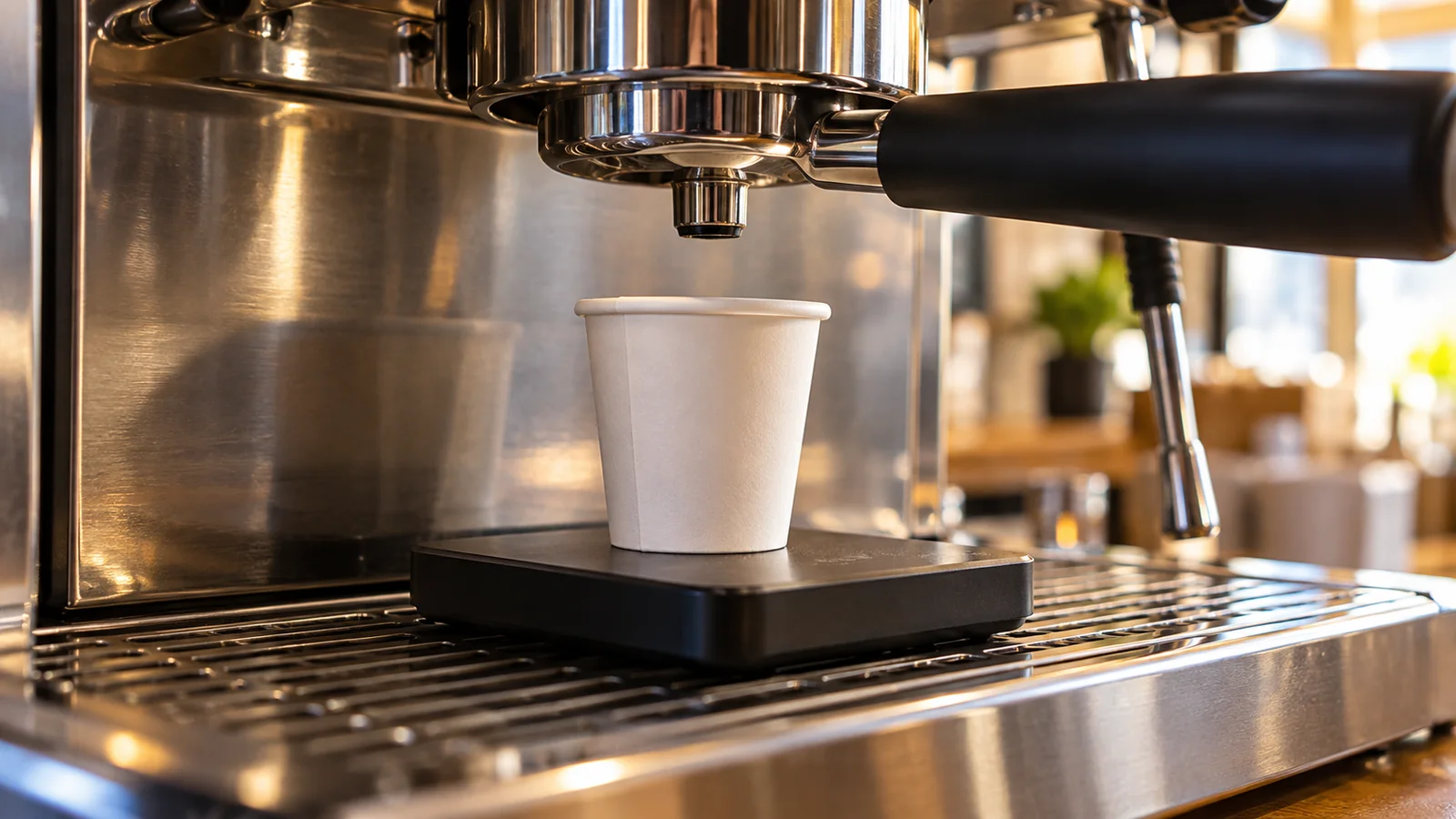
Check the actual machine arrangement. Place the sample on the tray or scale used by staff, confirm clearance under the outlet, and check that the cup can be positioned and removed during normal service. If the station has a dispensing mechanism, check the cup in that mechanism too.
For a machine-specific request, give the supplier the model and your measured clearance. A brand name alone does not describe the available space at your installation.
06 / Approve Your Samples
A Sample Check Before a Bulk Espresso Cup Order
Use this proposed acceptance workflow to turn a promising sample into a repeatable purchasing decision. Set acceptance criteria with the supplier before the trial; these steps are not a completed laboratory test.
- Identify the components. Record supplier, cup SKU, lid SKU, sample date and drawing revision. Photograph the sample and its packaging labels.
- Confirm the stated capacity. Ask whether the quoted figure is nominal, brimful or working capacity. Retain the supplier’s measurement method.
- Prepare the real menu drink. Use the normal recipe, additions and serving routine. Record the recipe and observed fill level.
- Check the assembled pack. Fit the lid, stir or add ingredients as normally required, and review the intended handover. Record any interference, overflow or other failure.
- Check station handling. Review machine clearance, stack access and any dispenser or carrier used in that service.
- Approve the reorder reference. Keep an accepted sample and written component specification so later substitutions can be compared with the same reference.
For multiple outlets, trial the proposed combination at stations that differ. Do not assume the result at one counter establishes compatibility everywhere.
What to include in the quotation request
Send the supplier your destination market, complete recipe, preferred capacity description, machine constraints, lid requirement, artwork and estimated order quantity. Ask for proposed cup-and-lid SKUs, material documentation, packing details, sample terms, minimum order and production schedule.
Keep commercial and technical approval connected. If a quotation changes the cup or lid SKU, review the pairing again before accepting the substitution. For custom printing, request the exact cup dieline and an artwork proof before signing off production files.
07 / Read Buyer FAQs
FAQ
What size are espresso cups?
About 2–3 US fl oz, roughly 60–90 mL, is a useful small-cup starting range. The correct purchase depends on the finished recipe and supplier’s capacity definition; it is not a universal serving standard.
What size cup should I use for a double espresso?
Compare samples against your actual double-shot recipe. A 3 oz or 4 oz candidate may be worth trialing, but neither is automatically correct for every recipe or lid arrangement.
Is a 4 oz espresso cup exactly 120 mL?
Four US fluid ounces convert to approximately 118.3 mL. A product labeled 4 oz or 120 mL still needs confirmed capacity and working-fill information.
Can single and double espresso use the same takeaway cup?
They may, if the cup passes your fill, handling and presentation checks for both drinks. Trial both recipes with the intended lid before choosing one stocked size.
Does espresso cup size tell me which lid to order?
No. Request the supplier’s matched cup and lid SKUs and approve samples together. Capacity alone does not provide a complete rim or lid specification.
09 / Discuss Your Project
Discuss Espresso Cups for Your Beverage Program
Share your finished drink volume, serving method, destination market, cup-and-lid requirements and estimated order quantity with PaperBull. For cafes, hotel groups and distributors planning bulk supply or custom logo printing, these details provide a practical basis for reviewing cup options, paired samples and a project-specific quotation.
10 / Review the Sources
Sources and Verification Notes
- NIST SP811 conversion factors support US fluid-ounce calculations. Chart values are rounded arithmetic, not product capacities.
- illy Turkey’s 60 mL listing and De’Longhi’s marketed 3 oz/90 mL DLSC308 set are individual vessel examples, not universal working-fill specifications.
- Nespresso’s Vertuo manual, page 17 provides the system-specific drink example. Other recipes need their own cup check.
LET’S REVIEW YOUR PROJECT
Find your cup fit.
Tell us about your drink, destination market and packaging requirements.