
Cup Size for Latte: A Café Guide to oz, mL and Takeaway Cups
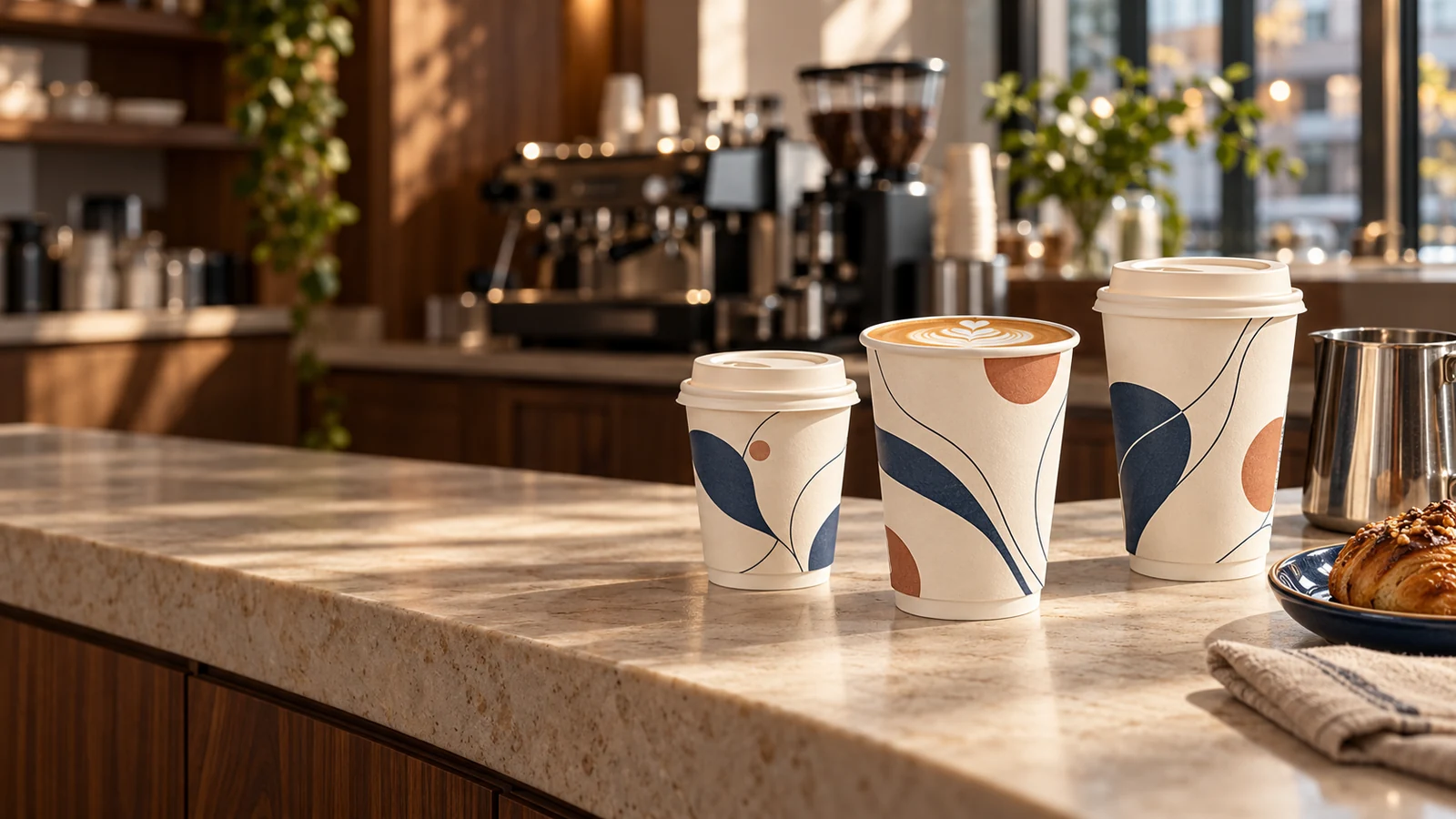
The right cup size for latte depends on the finished recipe and how you serve it. For a café choosing takeaway packaging, 8–12 US fl oz—approximately 237–355 mL—is a useful range to begin sample trials. Consider a 16 oz option if your menu needs a larger serving. These are starting candidates, not a universal latte standard or guaranteed usable fill volumes.
Choose the recipe first, then approve the cup, fill level and lid together. A cup that looks right on a menu can still be unsuitable if the finished drink leaves too much empty space or reaches the lid.
What Cup Size for Latte Should a Café Choose?
Start with the size of the drink you intend to sell. A compact latte, a regular takeaway latte and a larger iced latte may need different packaging, even when they share the same coffee blend.
Manufacturer examples illustrate the variation. notNeutral lists its Lino Small Latte cup at 8 oz (237 mL), while Loveramics lists an Egg Latte cup at 300 mL. Neither product establishes the correct capacity for every café.
For a new takeaway program, our recommendation is to compare samples around your intended small and regular servings before adding more sizes. Add a larger cup when it serves a distinct recipe or customer requirement. This keeps the decision tied to the menu rather than to the number of cup sizes a supplier offers.
Latte Cup Size in oz and mL
The table below uses US customary fluid ounces. NIST gives an approximate conversion of 29.57 mL per US fluid ounce. Values are rounded to whole milliliters.
| Nominal size | Approximate unit equivalent | Suggested role in a sample trial | Confirm before ordering |
|---|---|---|---|
| 8 US fl oz | 237 mL | Compact latte candidate | Finished recipe, foam space and lid clearance |
| 10 US fl oz | 296 mL | Intermediate serving candidate | Whether it offers a useful step from your other sizes |
| 12 US fl oz | 355 mL | Regular takeaway candidate | Serving fill level and customer-facing size description |
| 16 US fl oz | 473 mL | Larger hot or iced recipe candidate | Espresso/milk plan, ice where relevant, and lid fit |
| 20 US fl oz | 591 mL | Large-format candidate only where needed | Full recipe, handling and packaging validation |
These are unit equivalents, not measurements of a particular cup. A supplier may use a rounded commercial capacity label. Ask how the listed capacity was determined and what fill level is appropriate with the selected lid.
If your supplier quotes a cup in milliliters and your menu uses ounces, confirm the unit system and approved serving description before printing artwork.
Match the Cup to the Finished Recipe
A larger container does not automatically mean more espresso. If you keep the coffee portion unchanged and add more milk, you have changed the recipe balance. If you increase the coffee as well, the result is a different recipe again.
Write down the espresso recipe, milk quantity, syrup or other additions, and intended finished fill. Record espresso mass separately from beverage volume; do not treat grams as interchangeable with milliliters.
For milk drinks, compare the completed pour in the actual cup. Cold milk measured before steaming is not a substitute for checking the finished drink and foam in its serving container.
Separate Nominal Capacity from Working Fill
For procurement, distinguish three questions:
- What size is the cup sold as? This is its nominal commercial label.
- What does the supplier mean by capacity? Ask whether it is a brimful measurement or another specified method.
- Where should your drink finish? This is the operating fill level you approve for the recipe and lid.
Do not deduct an arbitrary percentage from nominal capacity and call it the usable volume. The appropriate clearance depends on the actual cup, lid, recipe and service conditions.
A Practical Sample-Check Procedure
Use this suggested approval process before committing to a bulk order:
- Obtain the exact cup and lid models being quoted.
- Prepare your recipe as staff will make it during service.
- Check the finished fill and appearance in the sample.
- Fit the lid and inspect contact, seating and clearance.
- Check handling in the intended carrier or handoff arrangement.
- Record the accepted combination, recipe and fill reference.
This is an operational trial, not a certified laboratory test. Keep the approved samples and photographs so staff and purchasing teams can refer to the same standard.
Latte Art Cup Size: Compare Shape as Well as Volume
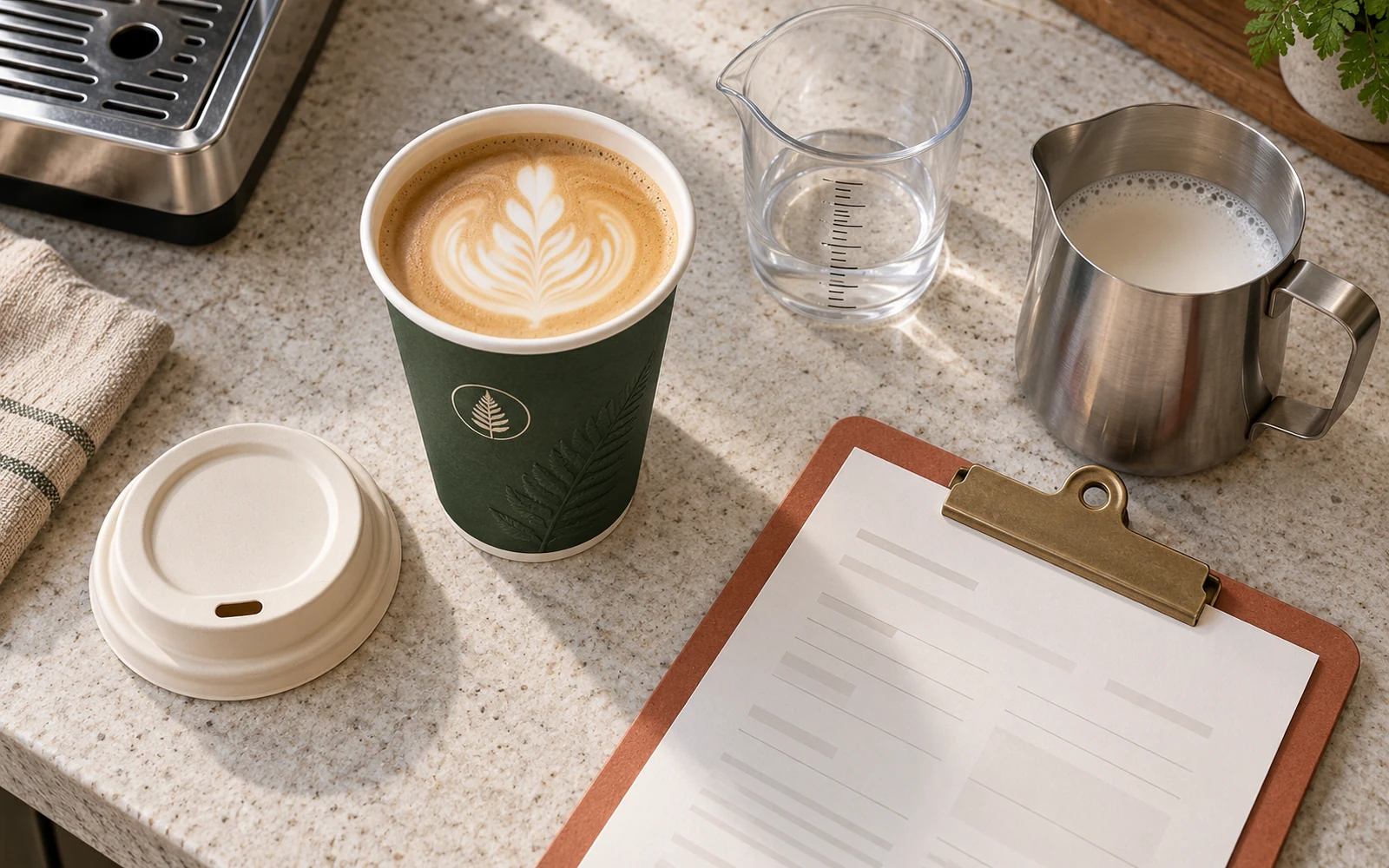
The best cup size for latte art should suit your recipe and pouring technique. Capacity alone does not tell you how much access the pitcher has or how the finished pattern will be presented.
For example, notNeutral describes the Lino cup’s interior curvature as designed for latte art. That is a feature of a named cup design, rather than proof that every cup of the same capacity behaves identically. See the manufacturer’s Lino design description.
Compare the opening, internal curve and working depth when selecting dine-in cups. For takeaway service, repeat the pour in the actual paper cup: a tall paper cup and a rounded porcelain cup with similar capacity are different pouring environments.
A café may reasonably approve one vessel for dine-in presentation and another for takeaway. The important check is whether the intended recipe works in both, rather than whether both carry the same size label.
Cappuccino vs Latte Cup Size
Do not use the drink name alone as a purchase specification. Write down the volume, coffee portion and foam presentation for each item on your menu.
As a product-specific example, the Loveramics Egg catalogue includes a 250 mL cappuccino cup and a 300 mL café latte cup. These are manufacturer product labels, not a worldwide rule for how cafés must prepare either drink.
If you plan to use one takeaway size for both drinks, test both recipes. Check whether their intended fill and appearance remain appropriate. Sharing a cup can be useful for stock planning, but should follow recipe approval.
Iced Latte Cup Size: Include Ice in the Trial
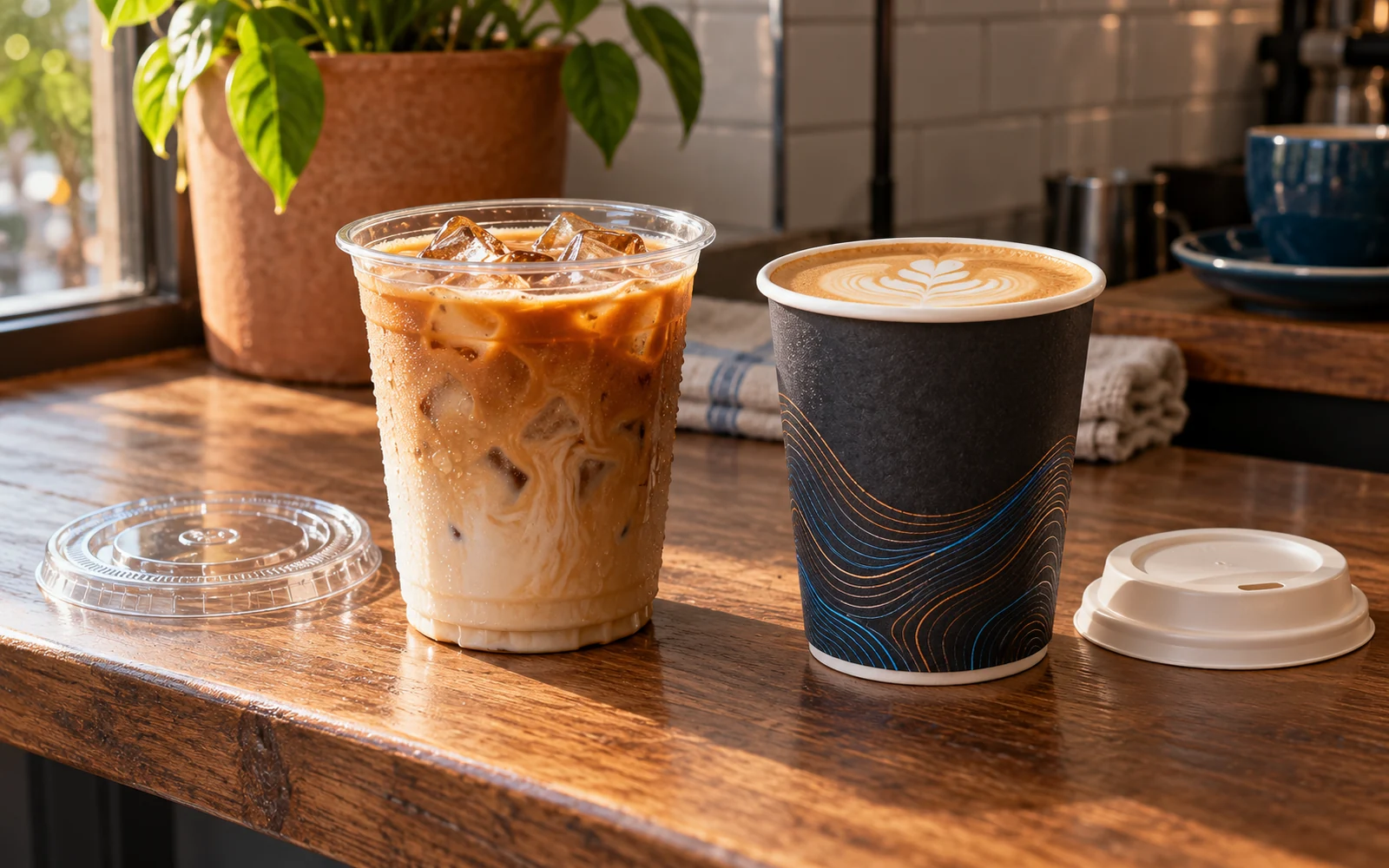
Choose an iced latte cup around the finished drink with ice, rather than transferring a hot-latte size decision unchanged.
Ice occupies space, but its packing varies with shape and loading. Do not assume a fixed amount of ice always leaves the same space for liquid. Standardize the recipe and ice-loading method, then check the finished drink.
For clear presentation, compare the cold PET cup options with the appropriate cold-service lid. Confirm the selected product’s intended application; a cold-cup listing is not approval for hot filling.
Check these points in the sample:
- The planned ice and liquid fit at the intended serving level.
- The lid suits the drinking method and any toppings.
- Staff can assemble the drink consistently.
- The package fits the actual carrier and handoff arrangement.
Do not infer the drink’s milk quantity from the cup’s nominal capacity. The cup also accommodates ice and whatever clearance the approved setup needs.
Packaging Options for a Latte Menu
Use this table as a shortlist for sample requests. It is a selection framework, not a claim that every product in a material family has identical performance.
| Service scenario | Cup candidate | Lid or accessory candidate | Approval priority |
|---|---|---|---|
| Dine-in latte with visible art | Reusable cup selected for recipe and shape | Saucer if used | Pouring access, finished fill and presentation |
| Compact hot takeaway latte | Smaller hot-drink paper cup | Exact matched hot-drink lid | Recipe fit, handling and lid seating |
| Regular hot takeaway latte | Single- or double-wall paper option, selected by trial | Matched lid; sleeve if the approved setup requires it | Working fill, grip and service conditions |
| Larger takeaway latte | Larger approved hot-drink cup | Matched lid and carrier | Complete recipe and handoff arrangement |
| Iced latte | Cold-service clear PET cup or another confirmed cold-drink option | Matching cold lid | Ice recipe, fit and drinking method |
| Multi-site branded menu | Approved cup family with size-specific artwork | Documented lid and carrier combinations | Consistency of codes, samples, artwork and reorders |
PaperBull’s 12 oz double-wall paper cup is one candidate for a hot takeaway program. Select it against your recipe and sample requirements rather than assuming that the nominal size guarantees a particular finished serving.
Can Different Latte Sizes Share One Lid?
Sometimes a supplier offers several cup sizes within one nominal rim family. This can be worth investigating, but does not remove the need to check the exact lid.
PaperBull’s published double-wall family table lists 90 mm rims for its named 8, 10, 12 and 16 oz models. That is a supplier-specific family reference, not a statement about every cup with those ounce labels.
Review the cup-and-lid compatibility guidance. Confirm the rim diameter, rim profile, lid-locking structure and actual sample pairing. Two cups described as 12 oz do not necessarily use the same lid.
For purchasing records, approve the cup code and lid code together. If a supplier changes a mold or component, ask whether your approved pairing needs to be checked again.
What to Confirm Before a Bulk Order
Turn the accepted sample into a written ordering specification. A clear request gives suppliers a better basis for discussing samples, custom printing and commercial terms.
| Item to record | Information to send or confirm |
|---|---|
| Menu and service | Hot or iced, dine-in or takeaway, intended customer serving |
| Recipe and fill | Finished drink, foam or ice method, approved fill reference |
| Cup identity | Supplier, exact model/code, nominal size and drawing where available |
| Cup construction | Selected wall structure and confirmed material/coating details |
| Lid pairing | Exact lid code, rim/profile compatibility and application |
| Artwork | Size-specific template, logo position, colors and approval sample |
| Handling | Carrier or holder used and intended handoff conditions |
| Packing and supply | Units per carton, carton details, quantity by size and destination |
| Commercial terms | Project MOQ, sample terms, price, production schedule and delivery basis |
| Repeat orders | Approved reference sample and change-notification expectations |
Keep the commercial values project-specific. A carton quantity is not a minimum order quantity, and a catalogue listing is not a confirmed production schedule.
For custom branding, approve artwork on the correct size template. A design that works on a short cup may need repositioning on a taller one. Check the appearance of the full set with the selected lids before approving the print.
FAQ
What size cup should a latte be?
Choose a cup that suits the finished recipe and service method. For takeaway sample trials, 8–12 US fl oz is a useful initial shortlist; add a larger format when your menu requires it. Confirm actual working fill and lid clearance before ordering.
What is a standard latte cup size in mL?
Use the café’s recipe rather than assuming one standard. Named manufacturer examples include a 237 mL small latte cup and a 300 mL latte cup. Their capacities describe those products, not a universal requirement.
Is a 12 oz latte cup exactly 355 mL?
Twelve US fluid ounces converts to approximately 355 mL using the NIST factor. A cup sold as “12 oz” is a commercial product: confirm its measured capacity, measurement method and approved serving fill separately.
What size cup is best for latte art?
Select capacity together with opening, internal shape and recipe. Compare a few appropriate samples with your baristas. A capacity label alone cannot identify the best pouring vessel, especially when comparing dine-in ceramics with takeaway paper cups.
Can I use the same cup size for hot and iced lattes?
Only after checking each complete recipe and the intended container. Ice loading, finished fill and lid requirements should be approved separately. Do not assume a hot-drink cup and a cold-drink cup are interchangeable because the size labels match.
Sources and Verification Notes
- NIST’s US customary-to-metric conversion table provides the approximate fluid-ounce factor used here.
- notNeutral’s Lino Small Latte product information supports the named 8 oz/237 mL example and manufacturer-described interior design.
- Loveramics’ 300 mL Egg Latte product and Egg catalogue provide product-specific size examples.
- PaperBull’s linked product and lid pages describe its listed family and compatibility checks. Final fill, exact lid pairing and commercial terms should be confirmed for the selected order.
The size shortlist and sample-check procedure are editorial recommendations. No physical sample testing was performed for this article. Sources checked on October 22, 2026.
Need Cups Matched to Your Latte Menu?
PaperBull supplies paper cups, cold PET cups, lids and custom printed packaging for beverage businesses. Share your hot and iced recipes, preferred nominal sizes, intended fill, lid requirements, order quantity and destination so the team can discuss suitable samples and a project quotation.