
Where Do Cafes Buy Paper Coffee Cups?
Learn where cafés buy paper coffee cups and compare local wholesalers, packaging distributors, online platforms, and factories by price, MOQ, speed, and printing.
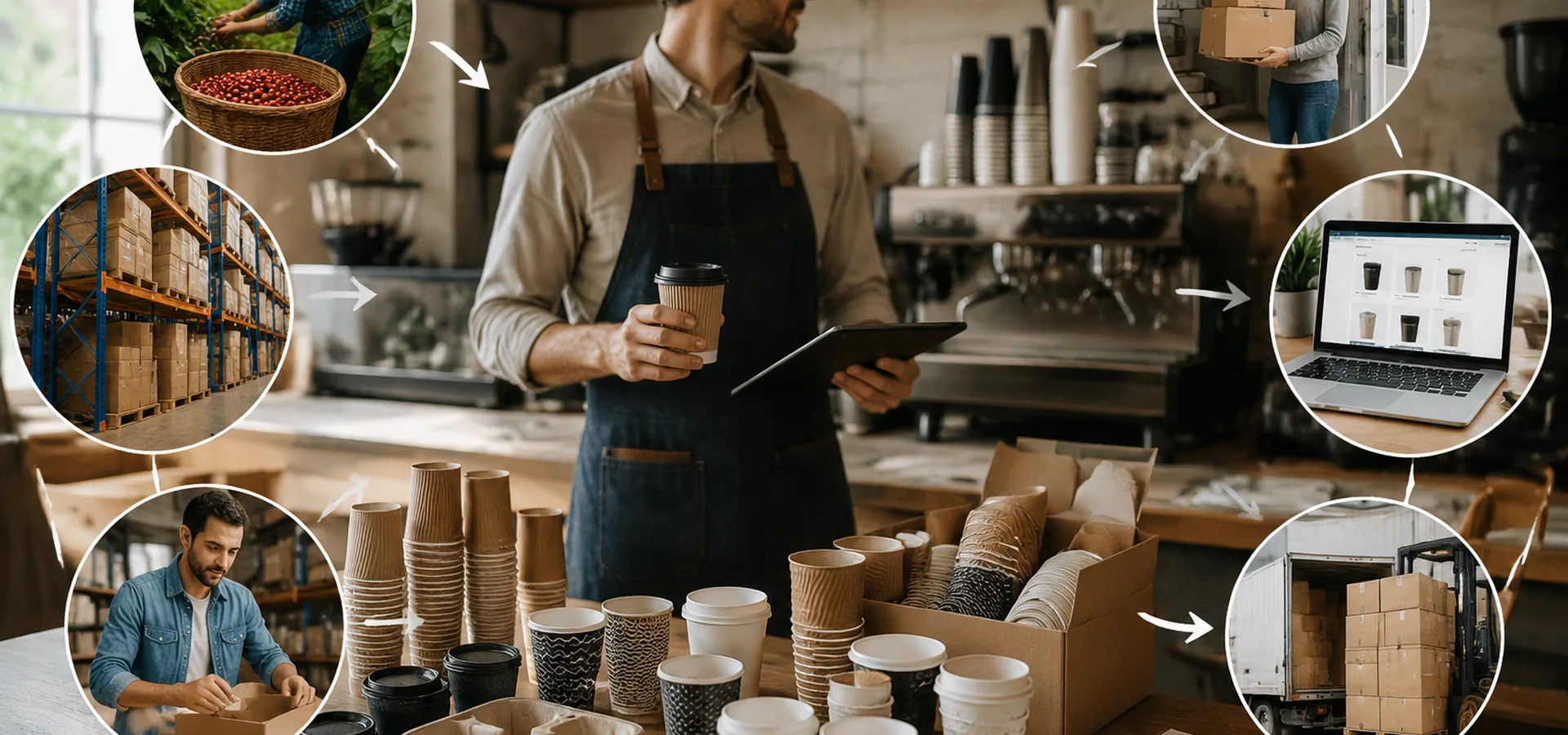
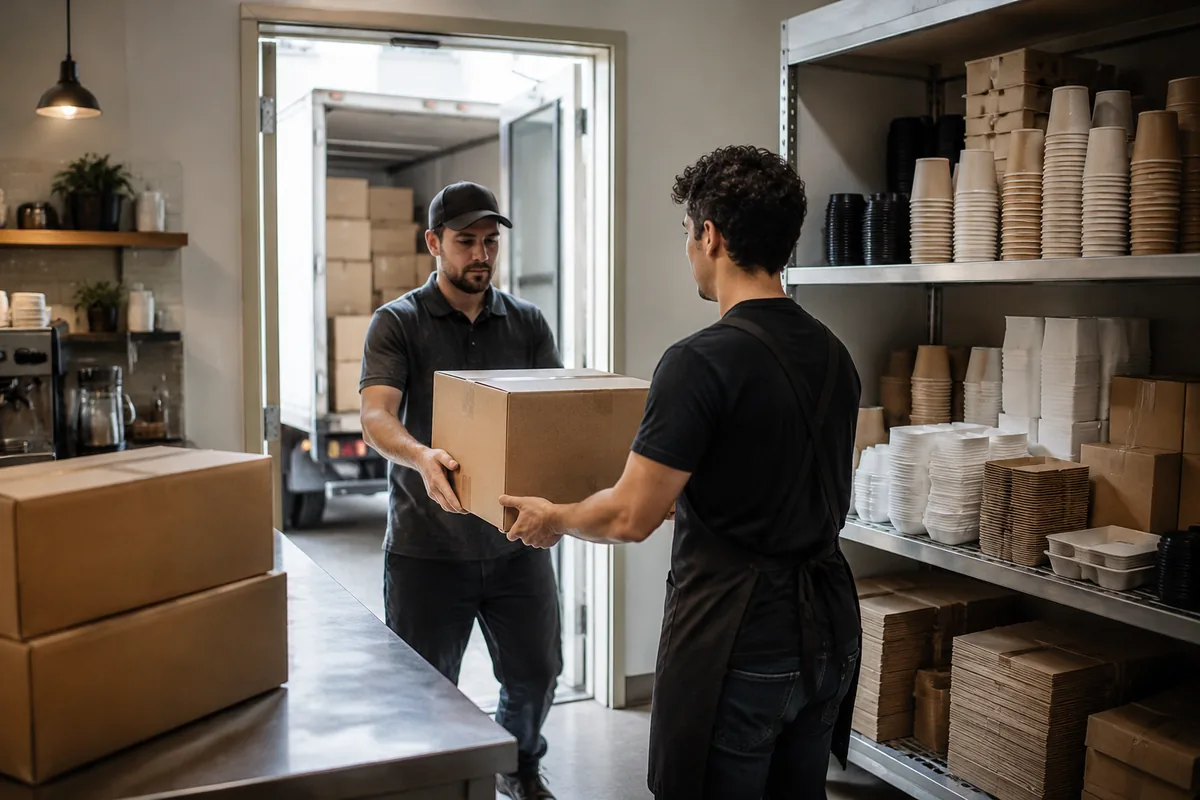
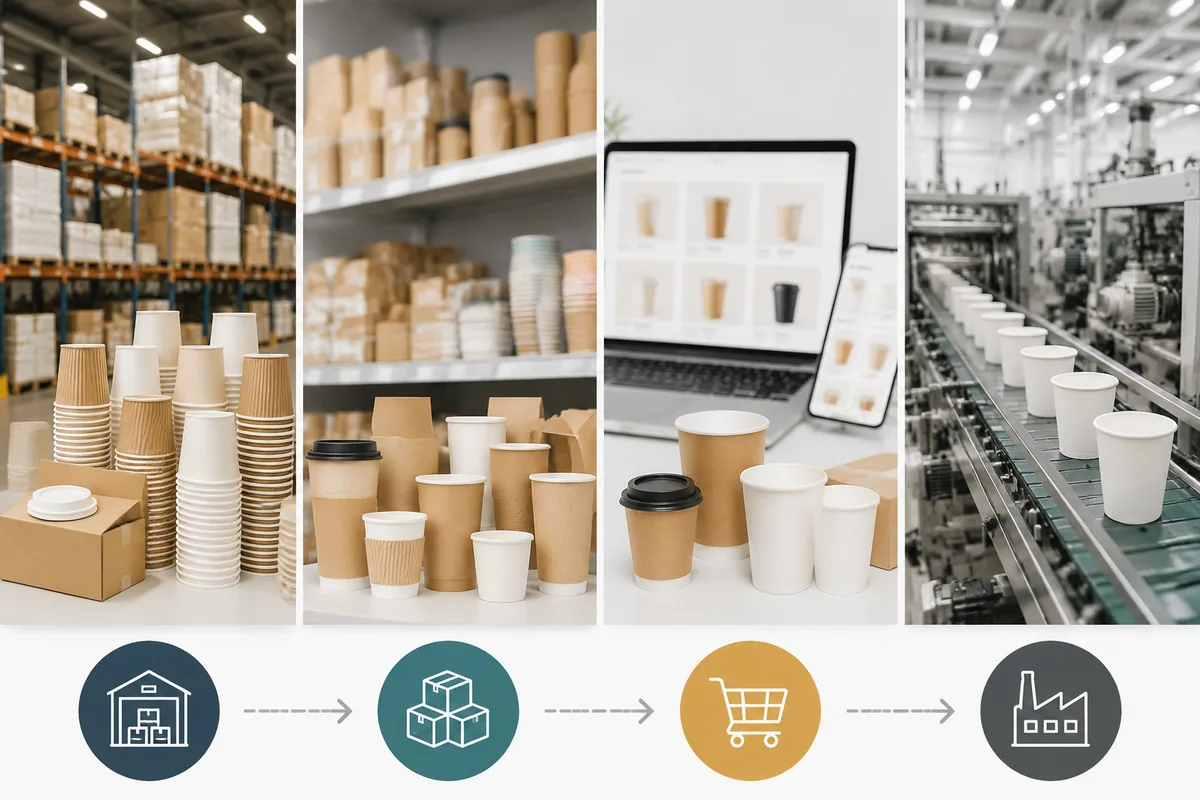
Cafés usually buy paper coffee cups from one of four places: local foodservice wholesalers, packaging distributors, online marketplaces, or paper cup manufacturers.
Each channel offers a different balance of price, minimum order quantity, delivery speed, product variety, and customization.
An independent café that needs a few cartons quickly may prefer a local supplier or online platform. A coffee chain that needs custom printed cups, matching lids, repeat specifications, and lower unit costs may be better served by a paper cup factory.
The right sourcing channel depends on order volume, storage space, branding requirements, delivery schedule, and how much control the café needs over cup size, material, printing, and lid compatibility.
The Four Main Places Cafes Buy Paper Coffee Cups
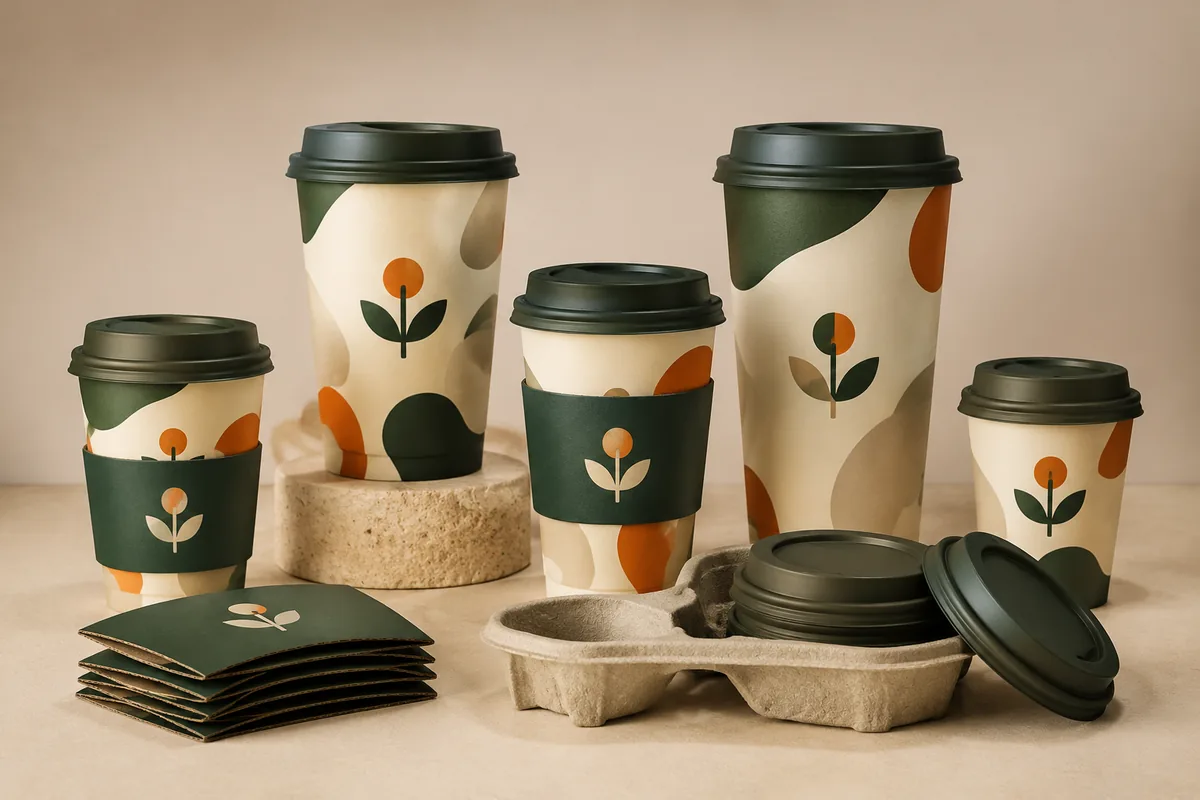
1. Local Foodservice Wholesalers
Local foodservice wholesalers are often the fastest option for independent cafés.
They normally stock common products such as:
- 8oz, 12oz, and 16oz paper coffee cups
- Black or white sip lids
- Coffee cup sleeves
- Straws and stirrers
- Cup carriers
- Takeaway food packaging
Advantages
- Fast local delivery
- Low carton quantities
- Easy returns or replacements
- No import process
- Suitable for urgent stock needs
- Mixed product orders are often available
Limitations
- Higher unit price
- Limited custom printing
- Limited control over paper thickness or coating
- Fewer cup and lid choices
- Product specifications may change if the wholesaler changes factories
Local wholesalers are practical for cafés with limited storage or unpredictable monthly demand.
2. Packaging Distributors
Packaging distributors usually offer a wider range than general foodservice wholesalers.
They may supply:
- Single wall paper cups
- Double wall paper cups
- Ripple wall cups
- Paper coffee cups with lids
- PET and PP cold cups
- Coffee cup sleeves
- Cup carriers
- Custom printed paper cups
- Food containers and takeaway packaging
Advantages
- Wider product range
- Better cup-and-lid matching support
- Wholesale pricing for regular customers
- More custom branding options
- Suitable for cafés purchasing several packaging categories
Limitations
- MOQ may be higher than local retail supply
- Delivery may take longer
- Distributor prices still include a resale margin
- Custom specifications may be limited to the distributor's approved factories
Packaging distributors are a good choice for growing cafés and small chains that need more support but are not ready to import directly.
3. Online Marketplaces and E-Commerce Suppliers
Online platforms are useful for comparing products and ordering standard paper coffee cups in small or medium quantities.
They often offer:
- Standard carton quantities
- Several cup sizes
- Paper cups with lids
- Small custom orders
- Fast domestic shipping
- Customer reviews
- Easy payment
Advantages
- Easy product comparison
- Convenient ordering
- Good for samples and small quantities
- Useful for urgent or temporary demand
- Suitable for new cafés testing cup sizes
Limitations
- Specifications may be incomplete
- Lid compatibility may not be tested
- Product quality can vary between listings
- Repeat stock may change
- Custom colors and logo printing may be limited
- Unit prices can be higher than wholesale or factory supply
Before ordering online, confirm the rim diameter, pieces per carton, lid compatibility, material, and return policy.
4. Paper Cup Manufacturers
Buying directly from a paper cup manufacturer is usually more suitable for coffee chains, distributors, branded cafés, and businesses that need paper coffee cups in bulk.
Factories can often support:
- Custom cup sizes
- Different paper thicknesses
- PE, PLA, or other coating options
- Single wall and double wall cups
- Custom printed paper cups
- Paper coffee cups with logo
- Matching lids
- Coffee cup sleeves
- Carton and pallet planning
- Repeat wholesale production
Advantages
- Lower unit cost at larger quantities
- More control over specifications
- Better custom printing options
- Stable repeat production
- Cup-and-lid compatibility testing
- Private-label or distributor supply
- Better support for large coffee chains
Limitations
- Higher MOQ
- Longer production time
- Freight and customs planning may be required
- More warehouse space may be needed
- Artwork and sample approval take time
- Buyers must evaluate factory quality carefully
Direct factory supply is most effective when order volume is predictable and the café can plan inventory in advance.
Supplier Channel Comparison
| Supply Channel | Typical Order Size | Price Level | Delivery Speed | Custom Printing | Best For |
|---|---|---|---|---|---|
| Local foodservice wholesaler | A few cartons | Higher | Fast | Limited | Independent cafés and emergency restocking |
| Packaging distributor | Cartons to pallets | Medium | Medium | Moderate | Growing cafés and small chains |
| Online marketplace | Small to medium | Medium to high | Fast to medium | Limited or short-run | New cafés, testing, and small orders |
| Paper cup manufacturer | Bulk or wholesale | Lower at scale | Longer | Strong | Chains, distributors, branded cafés, repeat orders |
How Independent Cafes Should Choose a Supplier
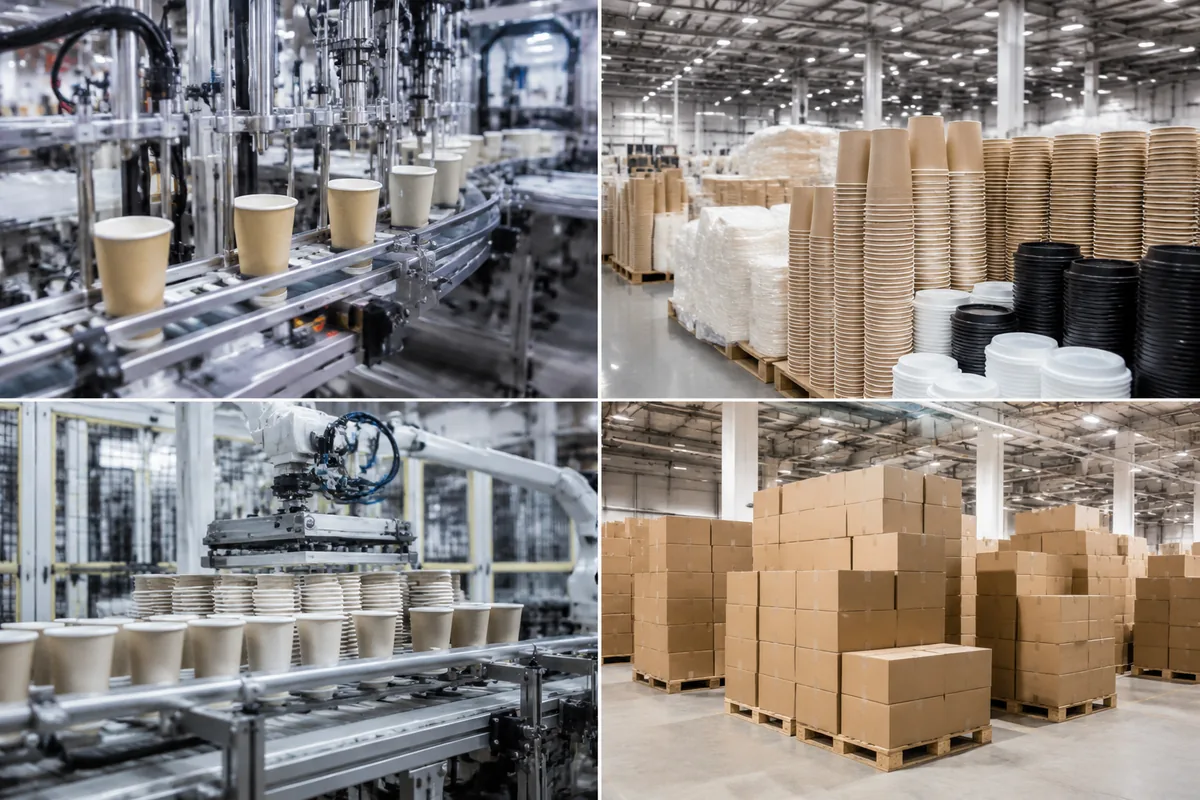
Independent cafés usually need flexibility more than the lowest possible factory price.
A local or online supplier may be suitable when:
- Monthly cup usage is low
- Storage space is limited
- The café is still testing cup sizes
- Cash flow needs to stay flexible
- Delivery speed is more important than unit price
- Plain cups are acceptable
A factory or packaging distributor becomes more attractive when:
- Monthly usage is stable
- The café needs custom printing
- Several branches use the same cup
- The business can store multiple cartons
- Cup and lid consistency matter
- Unit cost needs to be reduced
A new café should avoid buying a large custom order before confirming which cup sizes customers actually use.
How Coffee Chains Should Choose a Supplier
Coffee chains need a more controlled supply system.
Their purchasing requirements often include:
- Standard cup sizes across stores
- Fixed rim diameters
- Matching lid series
- Consistent printing
- Stable carton quantities
- Delivery schedules
- Multiple warehouse locations
- Forecast-based production
- Supplier quality records
- Repeat-order documentation
A chain may buy through a national distributor, regional distributor, or approved manufacturer network.
The best supplier is not always the lowest bidder. It is the supplier that can maintain the same cup, lid fit, print color, packing, and delivery performance across repeat orders.
How Many Paper Coffee Cups Should a Cafe Order?
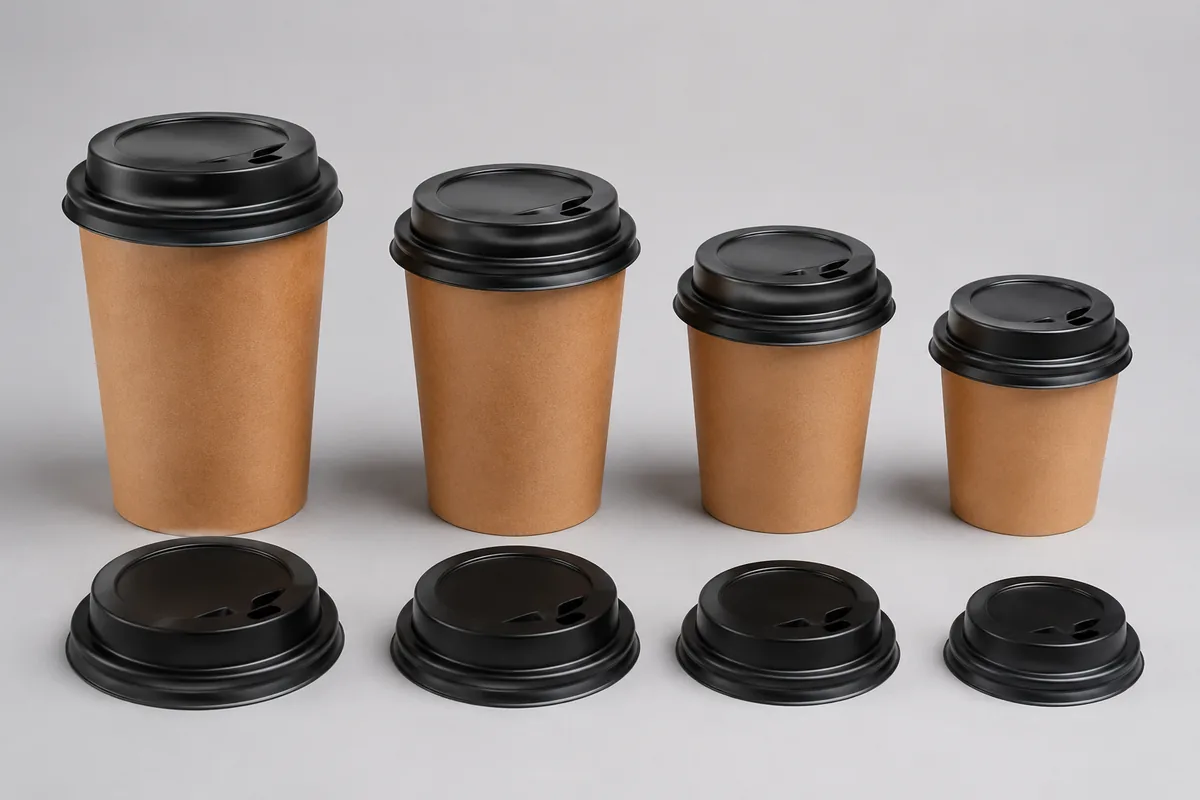
Order quantity should follow real cup consumption.
Simple Monthly Forecast
“text Monthly cup demand = average cups used per day × number of operating days + safety stock “
Example:
“`text 250 cups per day × 30 days = 7,500 cups
Add 10% safety stock: 7,500 + 750 = 8,250 cups “`
This example is only a planning model. Actual safety stock depends on delivery time, storage capacity, seasonality, and the reliability of the supplier.
Suggested Planning Approach
| Usage Pattern | Purchasing Approach |
|---|---|
| New café with unknown demand | Buy small cartons locally and track usage |
| Stable independent café | Order one to two months of standard stock |
| Multi-store café | Use scheduled wholesale deliveries |
| Custom printed cup program | Order based on forecast, production time, and storage |
| Seasonal or event demand | Separate normal stock from campaign quantities |
Avoid buying too much custom printed inventory if the design, menu, or store branding may change.
What Paper Coffee Cup Sizes Do Cafes Commonly Buy?
Common café sizes include:
| Cup Size | Common Use | Buyer Notes |
|---|---|---|
| 4oz | Espresso samples or tastings | Usually does not need a sleeve |
| 6oz | Small coffee or tea | Useful for office and hotel service |
| 8oz | Small takeaway coffee | Common for cappuccino or flat white |
| 10oz | Medium hot drink | Useful for cafés and office coffee |
| 12oz | Standard café coffee | One of the most common sizes |
| 16oz | Large coffee or tea | Requires reliable lid fit and heat protection |
| 20oz | Extra-large takeaway drinks | Confirm cup strength, lid, and sleeve compatibility |
Cup size labels do not guarantee the same physical dimensions across factories. Always confirm top diameter, bottom diameter, height, and lid code.
Paper Coffee Cups and Lids Must Be Matched
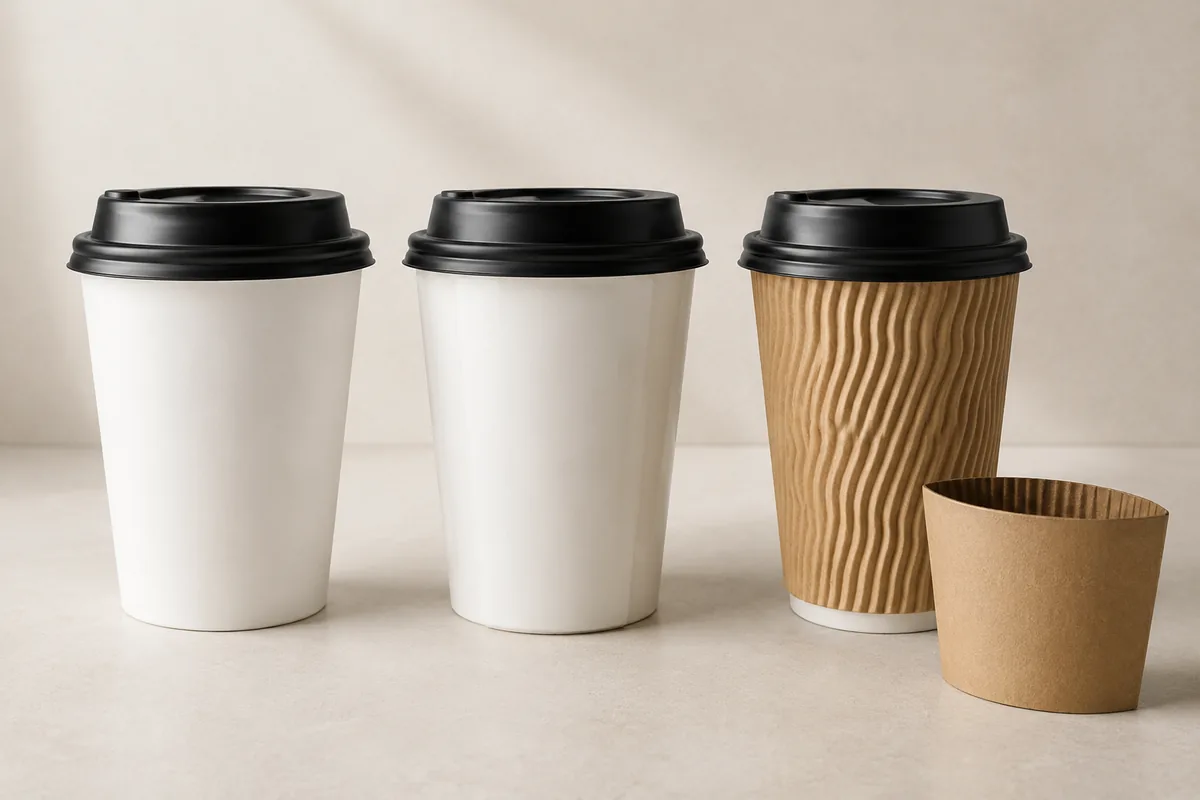
Cafés should never buy paper cups and lids only by oz size.
The cup lid must match:
- Top rim diameter
- Rim shape
- Forming tolerance
- Lid material
- Lid closure design
- Drink temperature
- Steam venting
- Takeaway use
A 90mm lid from one supplier may not fit every cup described as 90mm.
Before ordering paper coffee cups with lids in bulk:
- Request actual cup and lid samples.
- Fill the cup with hot water or the intended drink.
- Apply the lid several times.
- Test carrying, tilting, and sipping.
- Confirm the fit after the cup has been filled.
- Approve the exact cup and lid codes together.
This reduces leakage and customer complaints.
Single Wall, Double Wall, or Ripple Wall Cups?
Single Wall Paper Coffee Cups
Single wall cups are economical and easy to store. They are suitable for many takeaway programs but may need a coffee cup sleeve for hotter drinks.
Double Wall Paper Coffee Cups
Double wall cups have an inner cup and outer wall. They offer better hand comfort and a more premium feel.
They are often used by:
- Specialty coffee shops
- Hotels
- Premium takeaway brands
- Coffee chains
- Corporate coffee programs
Ripple Wall Paper Cups
Ripple wall cups use a textured outer layer that improves grip and insulation. They can take more storage space but may not need a separate sleeve.
Cup Structure Comparison
| Cup Type | Cost Direction | Heat Protection | Branding | Storage |
|---|---|---|---|---|
| Single wall | Lower | Basic | Good print area | Compact |
| Single wall + sleeve | Medium | Improved | Cup and sleeve can both be printed | Requires two SKUs |
| Double wall | Medium to higher | Strong | Premium appearance | More carton volume |
| Ripple wall | Medium to higher | Strong | Textured branding style | More storage space |
Plain Cups or Custom Printed Paper Cups?
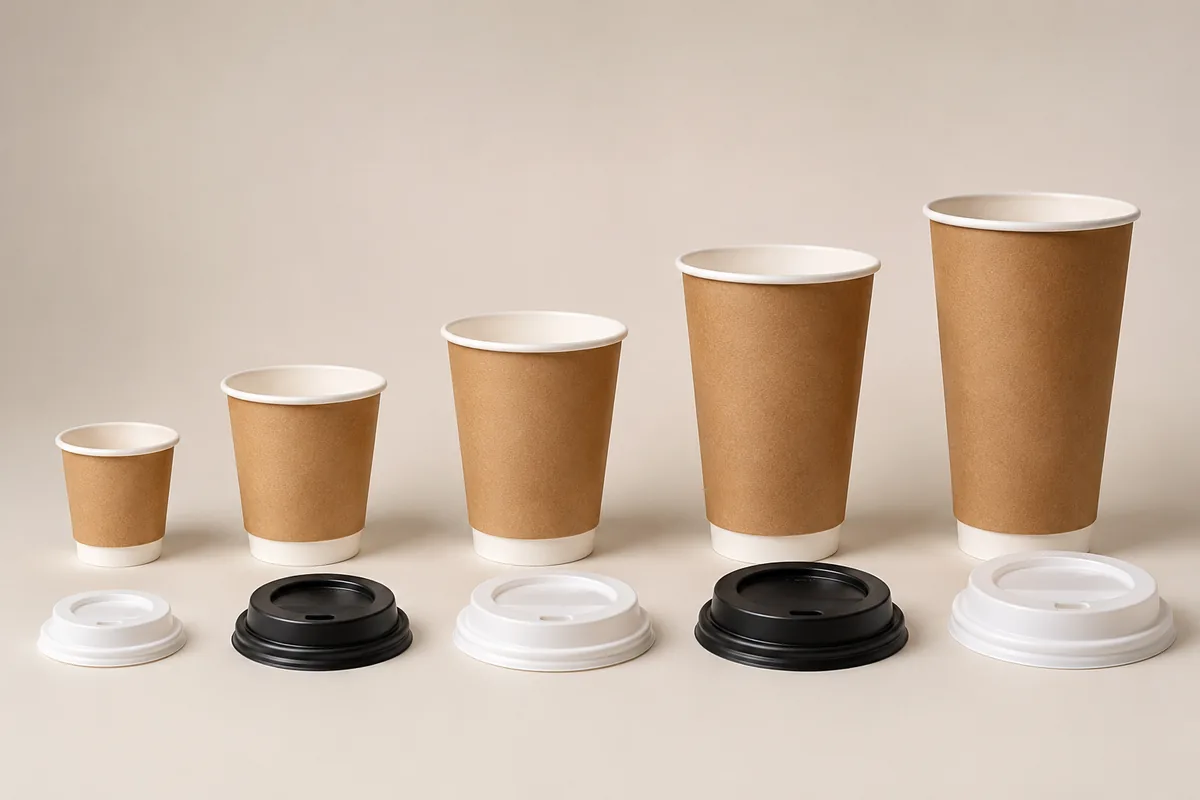
Plain paper coffee cups are easier to buy in small quantities and useful for new cafés.
Custom paper coffee cups become more valuable when:
- The café has stable branding
- Monthly volume is predictable
- Several branches use the same packaging
- The business wants stronger takeaway visibility
- Repeat ordering is planned
- The design will remain in use
Custom printed paper cups can include:
- Logo
- Brand colors
- QR code
- Social media handle
- Seasonal campaign
- Store message
- Product promotion
For small cafés, printed coffee cup sleeves can sometimes provide flexible branding with lower commitment than printing every cup size.
Retail Stock vs Factory Custom Production
| Requirement | Stock Cups | Factory Custom Cups |
|---|---|---|
| MOQ | Low | Higher |
| Delivery | Fast | Requires production time |
| Unit price | Higher at small quantities | Lower at scale |
| Logo printing | Usually unavailable | Available |
| Cup specification | Limited to stock | More configurable |
| Lid options | Standard stock | Can be matched to the cup series |
| Repeat consistency | Depends on supplier stock | Controlled specification possible |
| Storage need | Lower | Higher |
| Best use | New and independent cafés | Chains, distributors, branded cafés |
PaperBull custom logo orders commonly start from 10,000 pieces, depending on cup size, structure, printing method, and project requirements.
How to Compare Paper Coffee Cup Prices
Do not compare only the quoted price per cup.
Total Landed Cost
“text Total landed cost = cup price + lid price + sleeve price if needed + printing setup + inner packing + export cartons + freight + customs and duties + local delivery + warehouse handling + expected damage or complaint allowance “
A local supplier may quote a higher cup price but include fast delivery and lower order quantities.
A factory may quote a lower unit price but require more inventory, freight planning, and production time.
The correct comparison is total cost at the quantity your café can realistically use.
Questions to Ask a Paper Cup Supplier
Before placing an order, ask:
- What cup sizes and rim diameters are available?
- Which lids match each cup?
- Are cup and lid samples available?
- What paper thickness is used?
- What coating is used?
- Is the cup suitable for the intended drink temperature?
- Is the cup single wall, double wall, or ripple wall?
- How many cups are packed per sleeve and carton?
- What is the MOQ for stock cups?
- What is the MOQ for custom printing?
- What is the production lead time?
- Can the supplier maintain the same specification on repeat orders?
- What quality tests are performed?
- How are damaged or defective cartons handled?
- Can the supplier support lids, sleeves, carriers, and cold cups?
A good paper cup supplier should provide clear and consistent answers.
Sample Testing Checklist for Cafes
Before a large order, test the actual packaging.
| Test | What to Check |
|---|---|
| Visual inspection | Cup shape, printing, rim, and cleanliness |
| Hot-water test | Leakage, softness, and cup-wall stability |
| Lid-fit test | Tightness, removal force, and sip comfort |
| Sleeve test | Grip, size, and slipping |
| Stacking test | Whether cups separate easily during service |
| Cup-holder test | Fit for drive-thru or takeaway use |
| Packing inspection | Inner bags, carton strength, and quantity |
| Staff trial | Speed and ease of use during busy service |
A product that passes a short staff trial is more valuable than a quotation alone.
Inventory and Storage Considerations
Paper coffee cups are lightweight but bulky.
Before buying bulk cartons, check:
- Warehouse or back-room space
- Carton dimensions
- Maximum stack height
- Moisture control
- Distance from heat sources
- First-in, first-out inventory
- Separate storage for cups and lids
- Protection from crushing
- Monthly usage rate
A café with limited storage may save more money by ordering smaller quantities regularly, even if the unit price is slightly higher.
A chain with a warehouse can often reduce costs through scheduled bulk purchasing.
Best Supply Channel by Cafe Type
| Café Type | Recommended Channel | Why |
|---|---|---|
| New independent café | Local wholesaler or online supplier | Low MOQ and fast testing |
| Established independent café | Packaging distributor or factory | Stable usage supports better pricing |
| Small local chain | Distributor or direct manufacturer | Custom printing and standardization |
| National chain | Approved manufacturer and distributor network | Capacity, quality control, and multi-location supply |
| Mobile coffee cart | Local wholesaler | Limited storage and flexible demand |
| Hotel café | Distributor or factory | Multiple sizes, lids, and branding |
| Office coffee provider | Distributor or manufacturer | Regular bulk cartons and repeat delivery |
| Packaging reseller | Paper cup manufacturer | Wholesale pricing and private-label support |
Common Purchasing Mistakes
Mistake 1: Selecting by Cup Price Alone
A cheap cup can create more cost through leakage, weak paper, poor printing, or loose lids.
Mistake 2: Buying Cups and Lids Separately Without Testing
Nominal diameter does not guarantee compatibility.
Mistake 3: Ordering Custom Cups Too Early
New cafés should confirm cup sizes and monthly use before placing large custom orders.
Mistake 4: Ignoring Storage Space
Bulk cartons can consume more space than expected.
Mistake 5: Not Planning Lead Time
Factory custom production and international shipping require advance planning.
Mistake 6: Buying One Cup Type for Every Drink
Hot coffee, iced coffee, tea, and specialty drinks may need different cups and lids.
Mistake 7: Failing to Keep Specifications
Record product codes, dimensions, materials, lid matches, packing, and approved artwork for repeat orders.
How PaperBull Supports Coffee Cup Buyers
PaperBull supplies paper coffee cups and related beverage packaging for independent cafés, chains, distributors, hotels, offices, and wholesale buyers.
Our product options include:
- Paper coffee cups
- Hot paper cups
- Single wall paper cups
- Double wall paper cups
- Paper coffee cups with lids
- Paper coffee cup sleeves
- PET cups
- PP cups
- Flat and dome lids
- Cup carriers
- Custom printed paper cups
- Paper coffee cups with logo
Our supply support includes:
- Custom logo orders commonly starting from 10,000 pieces
- Multiple paper and coating options
- Cup-and-lid compatibility support
- Flexographic and offset printing
- Artwork assistance
- Leakage and stiffness checks
- Carton packing
- Bulk and wholesale supply
- Production lead times commonly around 15-20 working days after artwork approval, excluding shipping and subject to project requirements
For cafés comparing local supply, online ordering, distributors, and direct factory production, PaperBull can help review cup sizes, expected monthly volume, lid needs, branding, storage, and delivery location before recommending a supply plan.
FAQ
Where do cafés buy paper coffee cups?
Cafés commonly buy paper coffee cups from local foodservice wholesalers, packaging distributors, online marketplaces, or paper cup manufacturers.
Is it cheaper to buy paper coffee cups from a factory?
Factory unit pricing can be lower for bulk orders, but buyers must include MOQ, freight, customs, storage, and production time. Small cafés may find local supply more economical overall.
How many paper coffee cups should a café order?
Estimate average daily use, multiply it by operating days, and add safety stock. New cafés should begin with smaller quantities until actual demand is known.
Should cafés buy paper coffee cups with lids from the same supplier?
It is usually safer to buy or test the cup and lid as a matched set. A lid with the same nominal diameter may not fit every cup correctly.
Can small cafés order custom printed paper cups?
Yes, but factory custom printing normally has an MOQ. PaperBull custom logo orders commonly start from 10,000 pieces, depending on the cup and printing requirements.
What information should a café send to a paper cup supplier?
Send the drink type, cup capacity, quantity, lid requirements, single or double wall preference, logo file, delivery location, and required delivery date.
Looking for a Paper Coffee Cup Supplier?
PaperBull helps independent cafés, coffee chains, packaging distributors, hotels, and office coffee providers source paper coffee cups, lids, sleeves, PET cups, PP cups, and custom printed packaging.
We can help compare cup sizes, rim diameters, lid compatibility, printing options, carton quantities, production time, and wholesale supply requirements.
Contact PaperBull with your monthly cup volume, preferred sizes, lid needs, logo requirements, and delivery country to request a paper coffee cup supply plan.
Related packaging references

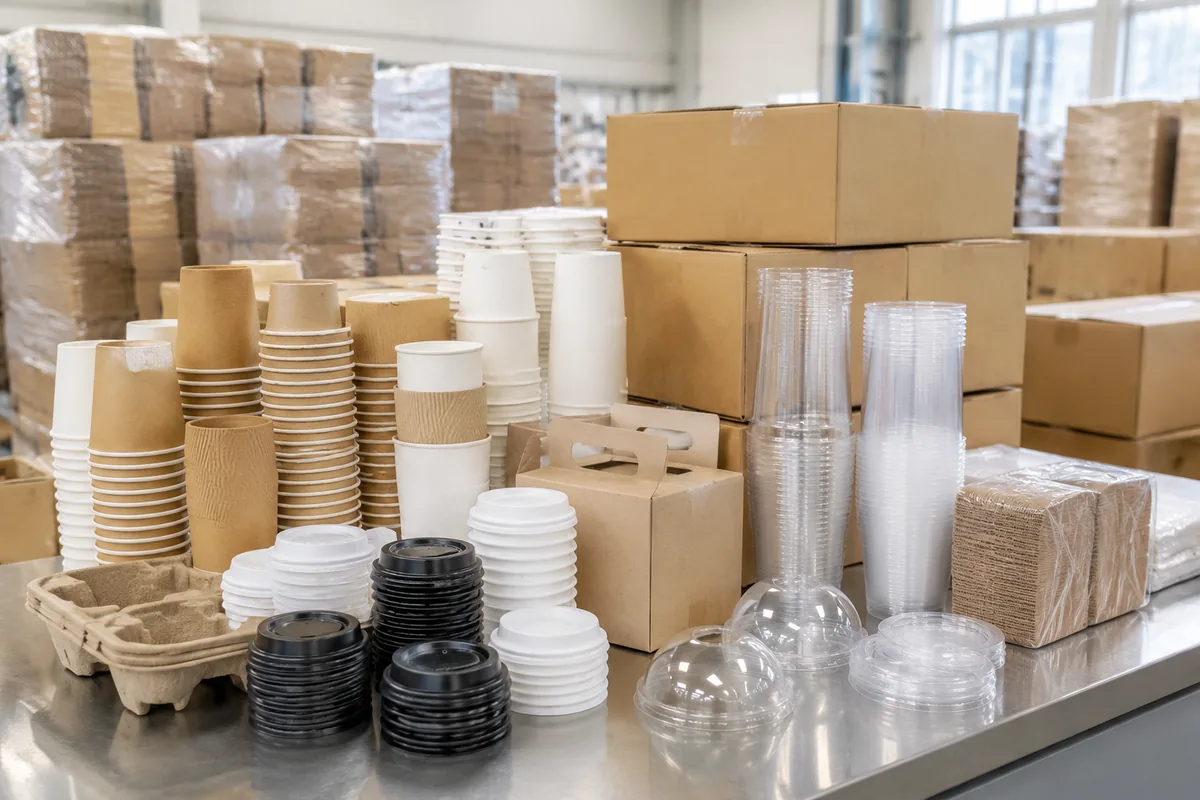
Need paper cup packaging for your project?
Send cup size, lid requirement, artwork, quantity, and destination. Paper Cup Bull will help confirm practical options for wholesale supply.